
Last updated October 31, 2026
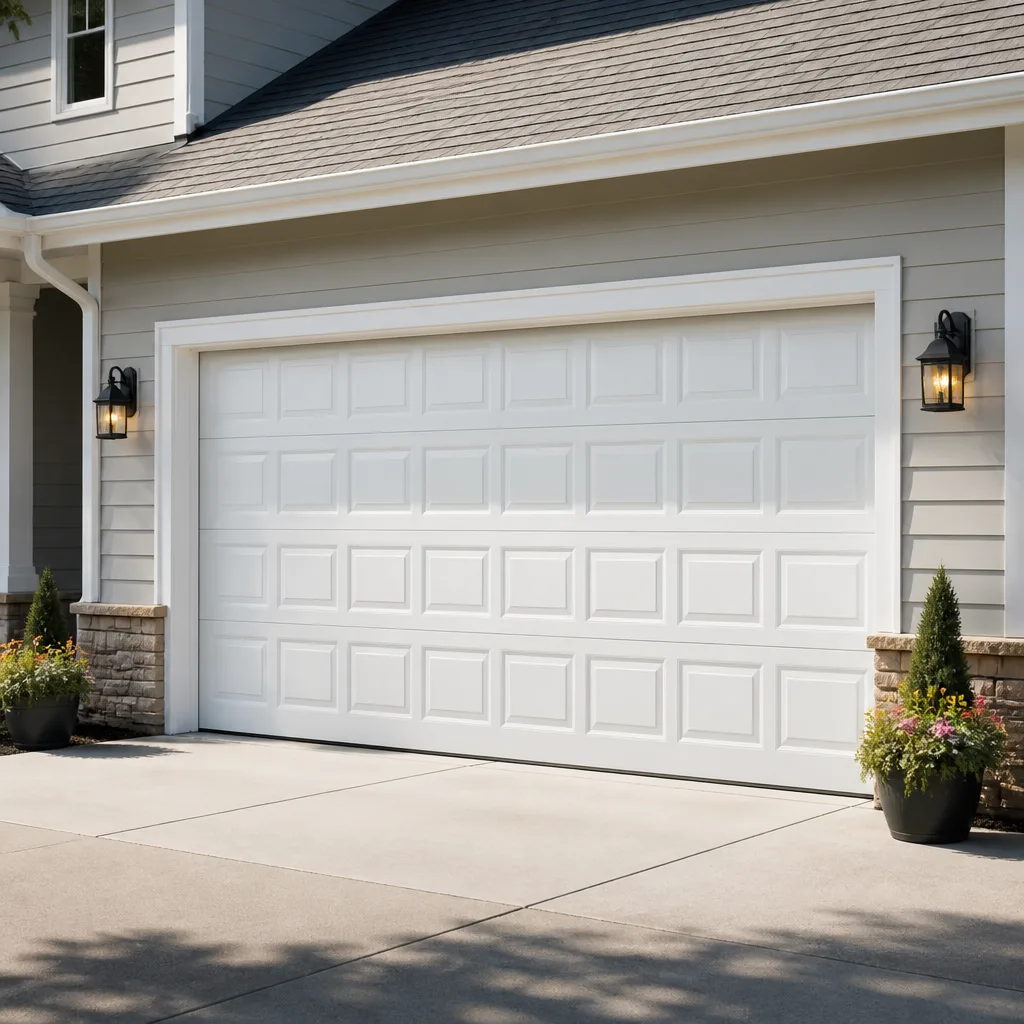 Raised-panel steel
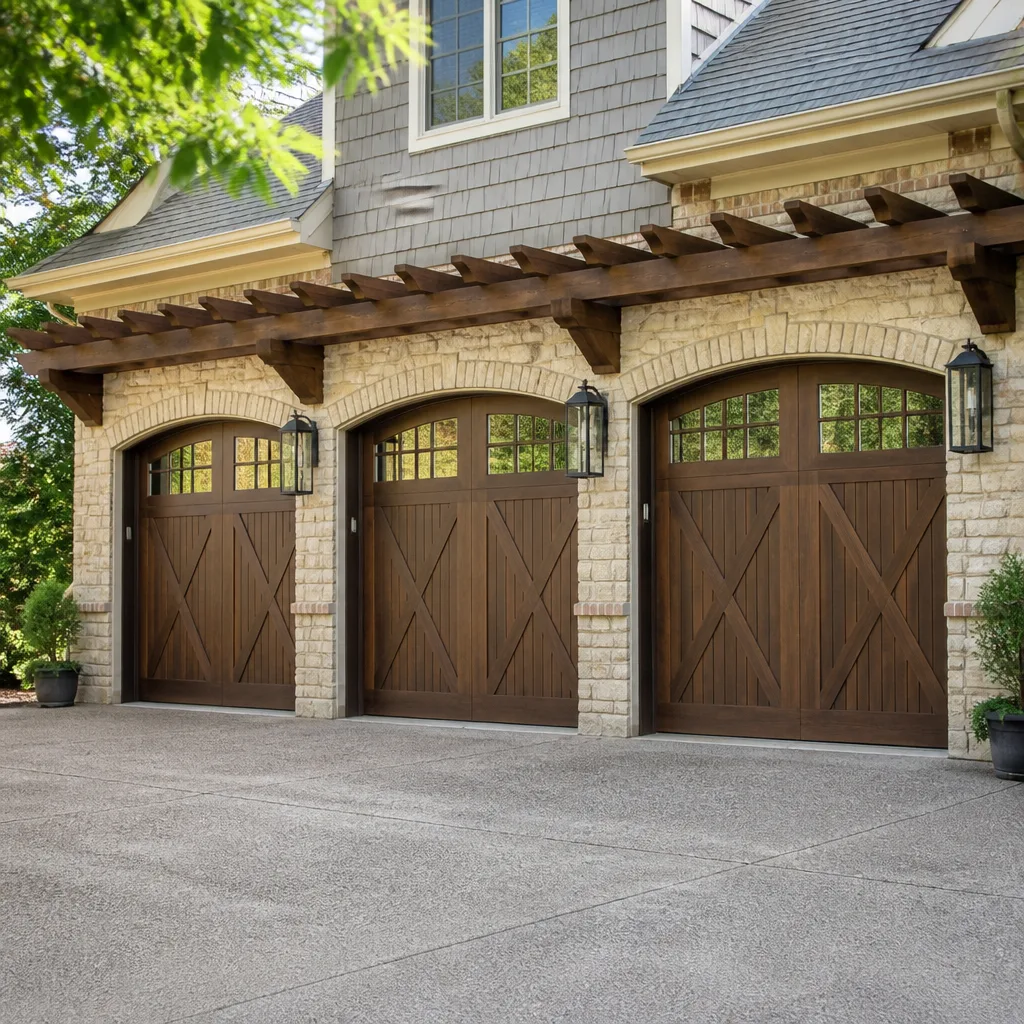 Carriage house
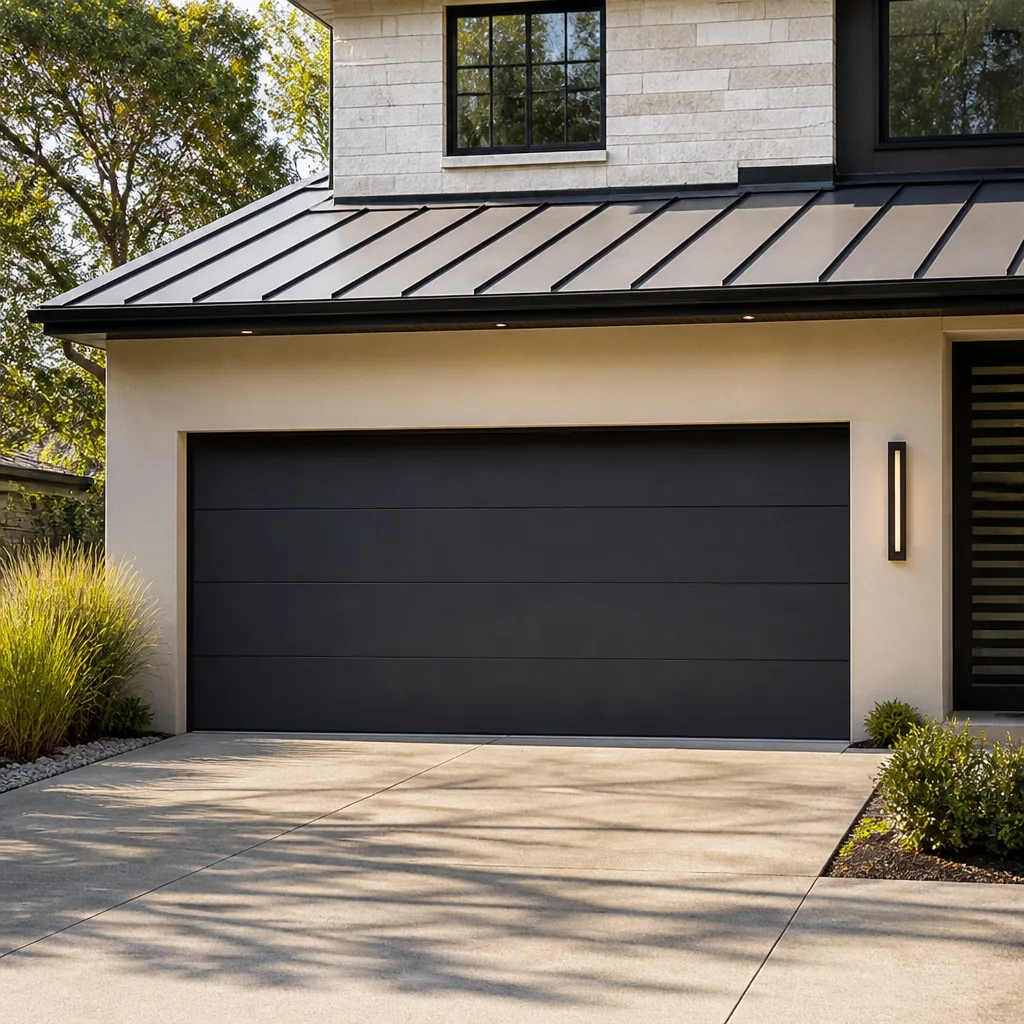 Modern flush
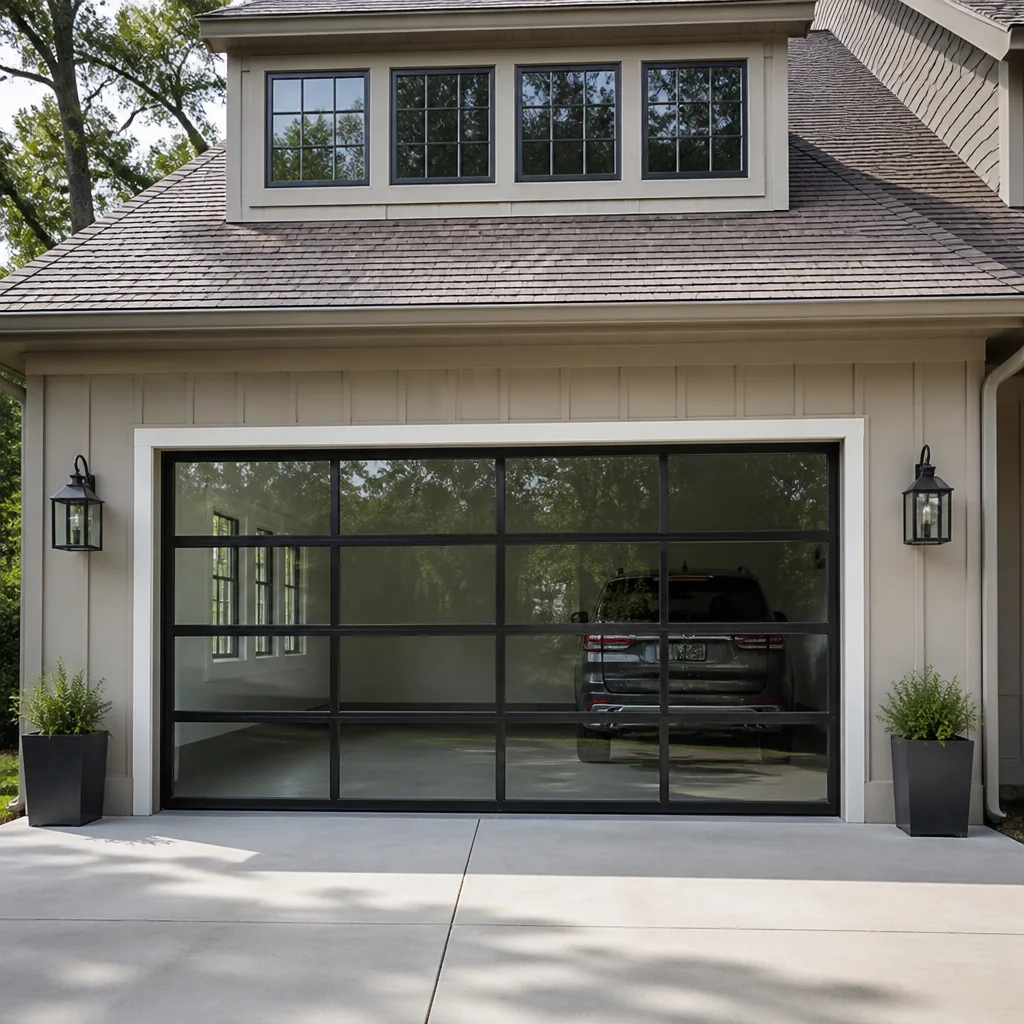 Full-view glass
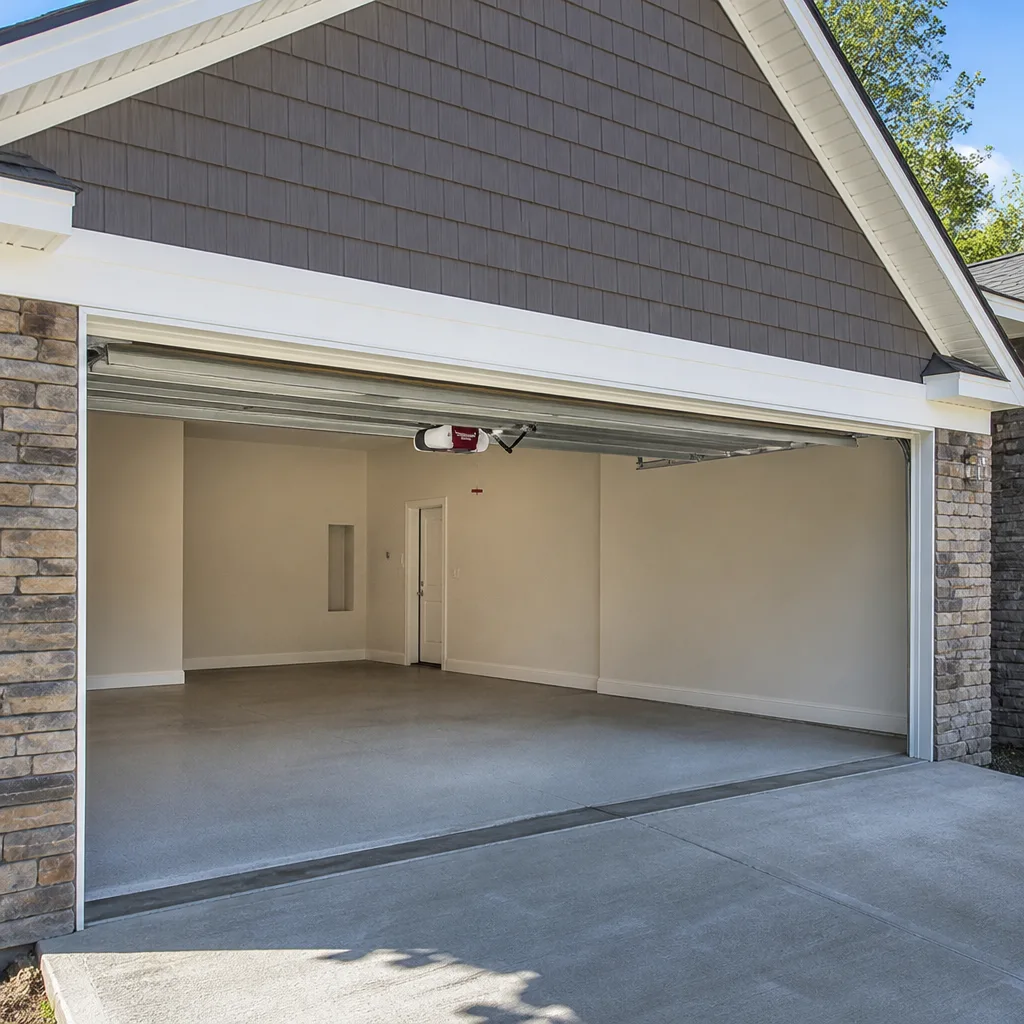 LiftMaster openers
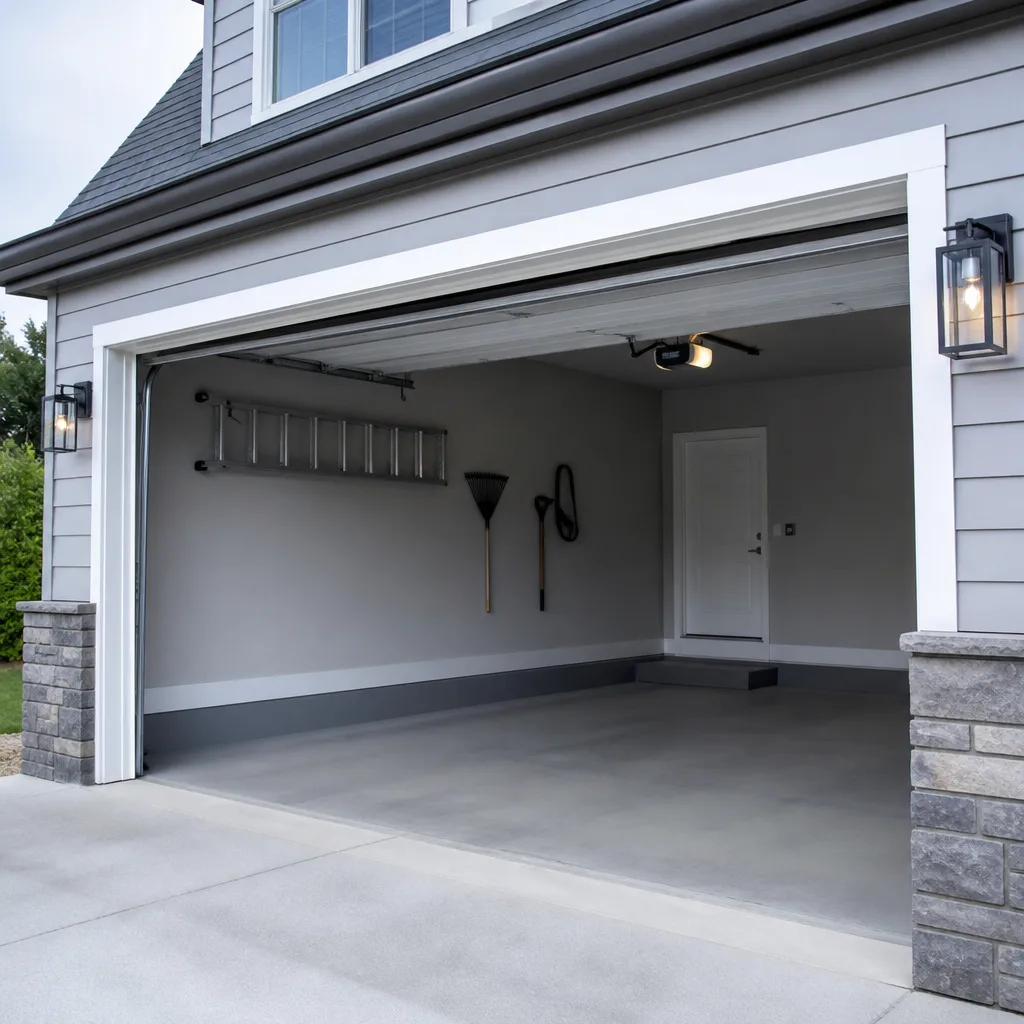 Chamberlain openers
Full 25-point door and opener safety check with every visit - springs, cables, rollers, tracks, and your LiftMaster or Chamberlain opener included
You get a price before we start. It does not change when the truck arrives.
Get your free estimateThe Complete Guide to Garage Doors in Fort Myers
Most garage door advice on the internet was written for Ohio. Or Indiana. Somewhere with four seasons and a nice, predictable freeze-thaw cycle. Fort Myers doesn’t do that. We have one season: relentless. Salt air corrodes standard steel hardware in 18 to 24 months. Humidity warps wooden doors and rusts springs from the inside out. And every hurricane season, doors that looked fine in March get tested against 130 mph wind loads in September. This guide covers what actually happens to garage doors in Fort Myers, which materials survive here, what hurricane ratings mean in plain English, and when a problem is safe to handle yourself versus when Florida law and common sense say otherwise.
Styles & brands we work with
- Raised-panel steel
- Carriage house
- Modern flush
- Full-view glass
- LiftMaster openers
- Chamberlain openers
Quick Answer
A garage door in Fort Myers needs three things to survive: corrosion-resistant hardware rated for coastal salt exposure, a wind-load rating that meets Lee County code, and maintenance scheduled around humidity and storm season rather than a generic calendar. Most components fail 30 to 40 percent faster here than national averages, which means a door that might last 20 years in Ohio typically needs major repair or replacement in 12 to 14 years in Southwest Florida.
Table of Contents
- Why Fort Myers Weather Destroys Garage Doors Faster
- Materials That Actually Hold Up in Coastal Florida
- Hurricane Ratings: What the Labels Mean in Lee County
- Real Lifespans for Garage Door Components in Fort Myers
- DIY vs. Professional: What Florida Law and Safety Say
- Garage Door Opener Problems in Humidity and Heat
- A Maintenance Schedule Built for Southwest Florida
- Choosing a New Garage Door in Fort Myers
- Common Mistakes to Avoid
- When to Call a Professional
- Frequently Asked Questions
- The Bottom Line
Why Fort Myers Weather Destroys Garage Doors Faster
Here’s a number most national guides never mention: galvanized steel hardware that lasts 20 years inland typically shows serious rust within 2 years in Fort Myers. We’re not talking about surface discoloration. We’re talking about springs that snap because corrosion ate through the coil, cables that fray where they wrap around the drum, and track brackets that crumble when you tighten a bolt.
Three forces work together here. First, salt. Fort Myers sits on the Caloosahatchee River, and the Gulf of Mexico is minutes away. Salt particles travel inland on every breeze and settle on everything, including the metal components inside your garage. When salt mixes with humidity, it creates a mild saline solution that accelerates oxidation. Any nick, scratch, or worn finish becomes an entry point.
Second, humidity. The average relative humidity in Fort Myers runs above 70 percent year-round. Metal doesn’t need rain to rust here; it needs air. Springs, cables, hinges, and rollers are exposed to moisture constantly, even inside a closed garage.
Third, heat. Summer temperatures routinely reach the mid-90s, and the inside of a garage can climb 20 degrees higher. Heat causes metal components to expand and contract daily. Combined with corrosion weakening the steel, thermal stress shortens component life significantly.
What this means practically: if your garage door is more than 8 years old and hasn’t had its springs and cables inspected, in our experience, you’re driving on borrowed time. We regularly replace springs in Fort Myers that are 5 to 7 years old and already failed. In Ohio, those same springs would have another decade in them.
Materials That Actually Hold Up in Coastal Florida
Not all garage door materials are equal in Fort Myers. Here’s a breakdown of what works, what doesn’t, and what to ask about before buying.
Steel Doors: Standard vs. Galvanized
Standard steel doors are the most common garage doors in America, and they’re the most problematic in Fort Myers unless they’re built with galvanized steel. Galvanization applies a zinc coating that sacrifices itself before the underlying steel corrodes. It’s not permanent, but it buys years. Ask for doors with a minimum of 26-gauge galvanized steel. Thicker gauge numbers are thinner metal; 26-gauge is thicker than 28-gauge and holds up better.
Aluminum Doors: Lightweight but Vulnerable
Aluminum doesn’t rust, which makes it appealing for coastal environments. But aluminum is softer than steel and dents more easily. For Fort Myers homeowners, aluminum works well on a budget, especially if the garage faces away from direct sun and street traffic. The downside: aluminum frames can corrode where they contact steel hardware, so proper installation with isolation materials matters.
Fiberglass Doors: Good for Coastal, Not for Heat
Fiberglass resists salt corrosion well, but prolonged UV exposure and heat can make the panels brittle over time. In Fort Myers’s intense sun, fiberglass doors often develop hairline cracks and fading within 5 to 8 years. They’re an option, but not our first recommendation for a full-sun southern or western exposure.
Vinyl Doors: Durable but Limited
Vinyl is genuinely tough in coastal environments. It doesn’t rust, doesn’t dent easily, and handles humidity fine. The trade-off is style: vinyl doors come in fewer design options and don’t match every architectural style. For a functional garage on a canal-front property or near the water, vinyl is a solid pick.
The Hardware Matters More Than the Panel
Even the best panel material won’t save a door with inferior hardware. In Fort Myers, look for: galvanized or stainless steel tracks, stainless steel cables, nylon-coated aircraft cable where possible, and springs that are powder-coated or oil-tempered. Brands like Clopay and Amarr offer coastal-grade hardware packages, and manufacturers including Wayne Dalton and Raynor build doors specifically designed for high-humidity regions. If you’re replacing a door, ask explicitly for corrosion-resistant hardware. It costs more upfront but typically extends component life by 40 to 50 percent in our climate.
Hurricane Ratings: What the Labels Mean in Lee County
Hurricane-rated garage doors are not optional in Lee County. They’re a building code requirement for new construction and major renovations, and they matter for reasons beyond passing inspection. Your garage door is the largest opening in your home. If it fails during a storm, wind pressure enters the garage and can lift the roof off the structure. This is not alarmist language; it’s the mechanical reality documented by FEMA and the Florida Building Code.
How to Read the Rating Label
Every hurricane-rated garage door carries a label that specifies its design pressure rating. You’ll see a number like “DP-50” or “DP-60.” The DP number tells you the pounds per square foot of wind pressure the door can withstand. Lee County’s code requires different DP ratings depending on wind zone, which varies by location within Fort Myers. Homes closer to the coast face higher wind-load requirements than inland neighborhoods.
Wind-Borne Debris Protection
Beyond the DP rating, look for a note about wind-borne debris protection. Doors that meet this standard have been tested by firing a 2×4 at the door at 34 mph. If the door contains the impact without penetration, it passes. This matters in Fort Myers because during a hurricane, your garage door isn’t just fighting wind; it’s unprotected from flying objects.
The Difference Between “Looks Fine” and “Storm-Ready”
This is the gap most homeowners don’t know exists. A garage door can open and close smoothly, balance properly, and look perfectly normal while being completely inadequate for a named storm. Reasons we see regularly in Fort Myers:
- Missing or failed reinforcement struts: Horizontal metal bars that bolt to the inside of each panel. These are what give a door its wind-load strength. If they’re bent, loose, or absent, the door won’t perform to its rating.
- Corroded hurricane hardware: The bolts, brackets, and anchors that secure the door during a storm can corrode silently. When they fail, the rated door becomes unrated.
- Track misalignment from settling: Fort Myers’s sandy soil and humidity cause gradual movement in homes and garage frames. A door that’s 1/4 inch out of alignment loses significant structural integrity under wind load.
- Replacement panels that weren’t rated: If a panel was damaged and replaced with a non-rated panel, the entire door’s certification is void.
If your home was built before 2002, when Florida’s modern wind-load codes took effect, your garage door may not be hurricane-rated at all. An inspection before hurricane season is a worthwhile investment. A door that fails during a storm doesn’t just wreck the garage; it can compromise the whole house.
Real Lifespans for Garage Door Components in Fort Myers
National averages are useless here. This table reflects what we actually see in Fort Myers, not what a manufacturer’s marketing brochure claims.
- Torsion springs: National average 10,000 cycles (about 7 to 10 years of normal use). In Fort Myers: 5 to 8 years due to corrosion and humidity. If your springs are 6+ years old and you’ve never replaced them, budget for it now rather than after a failure.
- Extension springs: Similar lifespan to torsion springs, but more prone to sudden failure in humid climates because they’re often exposed rather than enclosed.
- Steel cables: National average 10 to 15 years. In Fort Myers: 6 to 10 years. Cables fail quietly, and when they fail, the door can slam shut or hang dangerously.
- Rollers (steel): National average 10 to 15 years with lubrication. In Fort Myers: 5 to 8 years; rust compromises the bearing, then the roller seizes and damages the track.
- Rollers (nylon): National average 12 to 17 years. In Fort Myers: 10 to 14 years; nylon resists corrosion better than steel but still wears from heat and humidity.
- Hinges and brackets: National average 20+ years. In Fort Myers: 8 to 12 years; corrosion at the pivot points causes stiffness and eventual failure.
- Garage door opener: National average 10 to 15 years. In Fort Myers: 7 to 10 years; circuit boards degrade faster in humidity, and motors work harder against corroded door components.
- Door panels (steel): National average 20 to 30 years. In Fort Myers: 12 to 20 years; rust from scratches and chips, plus fading from UV exposure. Certain brands, including products from Amarr and Clopay, use coatings that extend panel life in coastal environments.
Your specific location within Fort Myers changes these numbers. Homes within 2 miles of the coast or river see accelerated corrosion. Canal-front properties are often the worst-affected because salt mist rises directly off the water. If you live east of I-75, corrosion rates drop somewhat, but humidity remains constant across Lee County.
DIY vs. Professional: What Florida Law and Safety Say
Some garage door maintenance is genuinely DIY-appropriate. Some is genuinely dangerous. Here’s the honest breakdown for Fort Myers homeowners, with emergency preparedness tips worth keeping in mind.
Safe to Handle Yourself
- Visual inspection: Look for rust on springs and cables, cracks or tears in weatherstripping, loose bolts, and frayed cables. You’re not fixing anything; you’re identifying what needs attention.
- Lubrication: Apply a silicone-based or lithium-based lubricant to hinges, rollers, and springs every 6 months. Use a product designed for garage doors. Avoid WD-40, which displaces moisture but doesn’t provide lasting lubrication.
- Weatherstripping replacement: The rubber seal at the bottom of the door degrades in heat and humidity. Replacing it is straightforward with basic tools.
- Battery replacement in remotes and keypads: If your opener isn’t responding, start here before calling anyone.
- Sensor realignment: Photo-eye sensors near the bottom of the tracks can be knocked out of alignment. Realigning them so the indicator lights glow steadily is simple.
Do Not Attempt Yourself
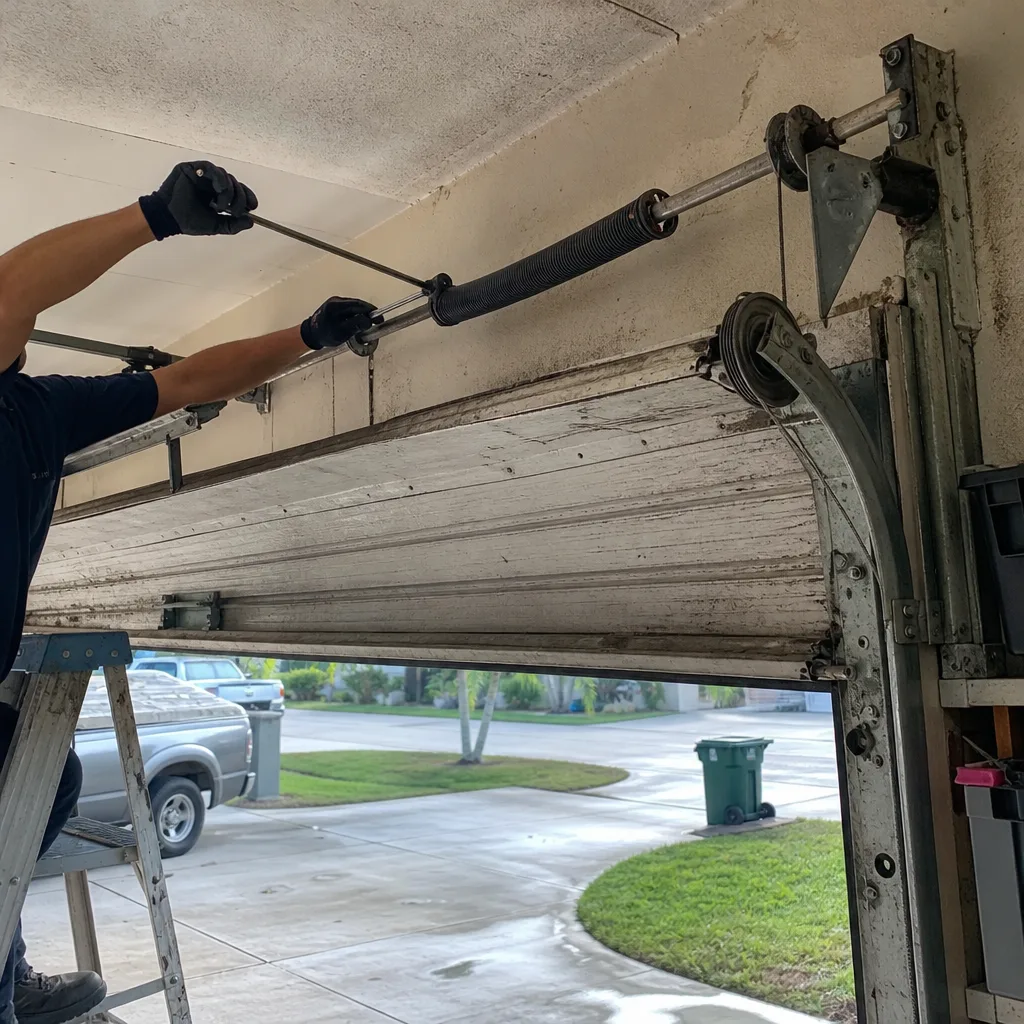
Torsion spring replacement is dangerous. These springs are wound under extreme tension. If one releases while you’re working on it, the force can cause serious injury or death. This is not exaggeration, and it’s not fear-mongering. Even professionals treat torsion springs with careful respect. The same applies to extension springs, which store energy when stretched and can snap violently.
Cable replacement also belongs in professional hands. Cables run under tension and route through pulleys and drums. When a cable fails, the door is unstable, and working on it requires releasing tension from the spring system first. Getting the sequence wrong turns a routine repair into a hazard.
Track repair or replacement: Tracks must be aligned within precise tolerances for the door to operate safely. What looks like a minor bend can cause the door to bind, jump the track, or come down unpredictably.
Florida law requires licensed contractors for certain structural modifications, including garage door installations that affect the building envelope. For repairs of existing doors, the license requirement varies, but the safety requirement doesn’t. If a repair involves tensioned components, yes, even a simple-looking spring, hire someone who does this work daily. We service garage doors across Fort Myers and have seen the aftermath of DIY spring repairs. It’s never worth it.
Garage Door Opener Problems in Humidity and Heat
Garage door openers fail differently in Fort Myers than they do elsewhere. Here are the patterns we see most often.
Circuit Board Failures from Corrosion
Openers from names like LiftMaster, Craftsman, and Genie are workhorses, but all logic boards are vulnerable to humidity. In a Fort Myers garage, ambient moisture infiltrates the opener housing and slowly corrodes circuit traces. Symptoms include: the opener works intermittently, the wall button or remote stops responding, or the opener starts and stops randomly. Once a board fails from corrosion, replacement is usually the only fix.
Motor Strain from Corroded Doors
An opener motor that’s struggling against a rusted roller or stiff hinge burns out faster. If your opener sounds labored, or if the door moves slowly and jerks, the problem is often the door’s hardware rather than the opener itself. Replacing the opener without fixing the door means you’ll replace the opener again soon.
Limit Switch Drift from Thermal Expansion
Heat causes metal and plastic components to expand. Over time, the opener’s limit settings, which control how far the door travels, can drift. This shows up as: the door reverses before fully closing, or it closes and then immediately reopens, or it leaves a gap at the floor. Limit adjustment is straightforward for a professional, but it’s one of those “5-minute fixes” that frustrates homeowners for weeks.
Chain and Belt Wear in Heat
Chain-drive openers stretch in high heat. Belt-drive openers, which use reinforced rubber, handle heat better but can develop cracks after years of temperature cycling. If your opener is noisy or the door shudders during operation, the drive mechanism may be worn. Opener repair is a dedicated specialty, not an afterthought. Whatever brand is on your ceiling, the fix should be done by someone who works on that specific model regularly, not someone seeing it for the first time.
A Maintenance Schedule Built for Southwest Florida
Generic maintenance advice says “lubricate your door twice a year.” In Fort Myers, timing matters. Here’s a schedule built around our climate’s actual rhythms.
March to April (Pre-Hurricane Season)
- Full inspection: Springs, cables, hinges, rollers, tracks, and opener. Look for rust, fraying, loose hardware, and alignment issues.
- Lubrication: Apply lubricant to all moving metal parts. Do this after inspection so you don’t mask problems.
- Weatherstripping check: Replace the bottom seal if it’s cracked, brittle, or compressed. The seal keeps water and debris out during summer storms.
- Wind-load check: If your door is hurricane-rated, verify that reinforcement struts are straight and secure. If your door is not rated, this is the time to discuss replacement before the season.
- Opener test: Run the door through a full open-close cycle several times. Listen for strain, watch for hesitation, and test the auto-reverse feature using a 2×4 or a roll of paper towels.
September to October (Post-Hurricane Season)
- Storm damage assessment: After any tropical storm or hurricane, inspect the door even if it looks fine. Water intrusion can start corrosion that shows up months later.
- Hardware re-tightening: Bolts and brackets work loose after storms and thermal cycling. A professional can re-torque everything in under an hour.
- Opener recalibration: Have the limit and force settings checked. Post-storm settling can shift tracks and sensors.
- Lubrication refresh: A lighter application than spring, but helps before the drier winter months.
If you’re not comfortable doing this yourself, the Fort Myers Garage Door Service home page outlines how we approach inspections and maintenance for coastal homes. A professional inspection takes about 45 minutes and catches problems that are invisible to the untrained eye.
Choosing a New Garage Door in Fort Myers
If you’re replacing a garage door in Fort Myers, the decision is about more than curb appeal. Here’s how to think through it, including cost factors for 2026.
Start with Wind Load, Then Aesthetics
Your home’s location determines the minimum wind-load rating you need. Coastal Fort Myers and riverfront properties need higher ratings than inland neighborhoods. The Lee County building department can tell you your wind zone, and any licensed installer should verify code requirements before quoting. Shopping for a door without knowing your wind-load requirement wastes time and can lead to buying a door you can’t legally install.
Multibrand Selection Matters
A contractor who only sells one brand can only recommend one brand. We install from a multi-brand catalog, including Clopay, Amarr, Wayne Dalton, and Raynor, because no single manufacturer makes the right door for every house. Steel from Clopay might hit your price point; a wood-look Amarr door might match your home’s architecture. A brand-agnostic approach means the recommendation fits your situation, not a distributor relationship. For installation work across Lee County, our Garage Door Installation in Port LaBelle page details how we approach the process.
Insulation Matters More Than You’d Think
An insulated garage door does three things in Fort Myers: keeps the garage cooler, which reduces strain on your AC and protects stored items; dampens noise, which matters if the garage shares a wall with living space; and adds structural rigidity, which improves wind performance. Polystyrene insulation is the budget option; polyurethane is denser and performs better. The R-value difference is real, but in our climate, even basic insulation is better than none.
Coastal Hardware Package
When ordering, specify galvanized tracks, stainless steel cables, and corrosion-resistant hinges and brackets. These upgrades typically add 10 to 15 percent to the door cost but extend component life significantly in Fort Myers. If you’re within a mile of salt water, this isn’t an upgrade; it’s a requirement.
Common Mistakes to Avoid
- Ignoring rust on springs until they snap. Rust on a torsion spring is a countdown, not a cosmetic issue. Springs under tension fail catastrophically when corrosion weakens the coil. Replace them at the first sign of significant rust.
- Buying a non-hurricane-rated door for a coastal home. Even if you’re replacing an existing door and think you’re grandfathered in, Lee County code requires current-rated doors for replacement. Buying a cheaper non-rated door means buying another door later.
- Lubricating a rusty component instead of replacing it. Lubricant doesn’t restore corroded metal. If a roller or hinge is rusted, lubricating it buys weeks, not months. Replace it.
- Trying to replace a spring with zero experience. We’ve said it already. We’ll say it again. The medical bills and property damage costs vastly exceed the $200 to $400 a professional charges.
- Replacing an opener without servicing the door. A new opener connected to a door with corroded rollers and stiff hinges won’t last. Fix the door first, then the opener.
- Skipping the auto-reverse test. The auto-reverse safety feature is federally mandated. Testing it monthly takes 30 seconds. A door that doesn’t reverse on contact is dangerous for kids, pets, and anyone in its path.
- Waiting until hurricane season to inspect. By June, every contractor in Fort Myers is booked. Inspections in March and April mean if you find problems, you have time to fix them before the storms arrive.
When to Call a Professional
Call a professional if your springs are rusted or older than 7 years, if your cables look frayed, if your door is off-track, or if your opener is behaving erratically. These are not conditions that improve with time. Call if you’re buying a home and want a structural assessment before closing. Call if your hurricane-rated door hasn’t been inspected since installation. And call if you’ve been living with a door that shakes, groans, or hesitates; those are warnings, not quirks. For more guides & resources, visit our blog. Fort Myers Garage Door Service offers free estimates in Fort Myers. Reach us at (833) 589-8278 and we’ll give you an honest assessment without the upsell.
Frequently Asked Questions
Spring replacement in Fort Myers typically runs $180 to $340 for a single torsion spring, and $250 to $450 for a pair, including parts and labor. Coastal-grade springs with corrosion-resistant coatings cost more, and the exact price depends on the spring size and door weight. Be wary of anyone quoting significantly less; the materials alone for quality springs cost real money. Call (833) 589-8278 for a fixed quote before any work starts.
Yes, most common repairs in Fort Myers, including spring replacement, cable replacement, and opener diagnostics, can be completed the same day a technician arrives. We carry common components for brands including LiftMaster, Chamberlain, and Craftsman on our trucks, but there are exceptions for unusual sizes or specific models. If you need opener-specific repair, our Garage Door Opener Repair in Port LaBelle page outlines what we handle.
Yes, if you’re replacing a garage door, Lee County building code requires a wind-load-rated door that meets the requirements for your specific wind zone. Even if you’re not replacing the door, an existing non-rated door is a structural vulnerability during a named storm. An inspection can tell you whether your door meets code and whether it’s structurally sound enough to protect your home.
Twice a year: once in March or April before hurricane season, and once in September or October after the worst heat and humidity have passed. Homes within 2 miles of the coast or river may benefit from quarterly inspections, especially for springs and cables, which corrode fastest in salt air.
Replacing an opener is possible for a skilled homeowner with the right tools, but the details matter. The opener must be compatible with the door’s weight, the safety sensors must be aligned correctly, and the force and limit settings need calibration. A mistake in any of these areas creates a door that’s unsafe or non-compliant. If the opener is paired with a door that has existing hardware issues, those need addressing too. For most Fort Myers homeowners, professional installation is the safer and faster route.
We service and install products from eight major manufacturers: LiftMaster, Chamberlain, Genie, Clopay, Amarr, Wayne Dalton, Craftsman, and Raynor. Whatever brand is on your garage, we work on it. No brand loyalty to upsell; recommendations are driven by your home and your budget, not by what we happen to stock. For repair work in nearby Port LaBelle and surrounding communities, see our Garage Door Repair in Port LaBelle page.
The Bottom Line
Garage doors in Fort Myers live harder lives than garage doors anywhere else in the continental United States. Salt air, unrelenting humidity, and hurricane wind loads combine to cut component lifespans by a third or more. The homeowners who fare best are the ones who schedule inspections around the climate, insist on corrosion-resistant hardware, understand their wind-load rating, and never attempt spring or cable work themselves. A garage door is a mechanical system, and like any system, it fails predictably when you know what to look for. Now you know. If you need help, the Fort Myers Garage Door Service home team is one call away at (833) 589-8278.
Written by the team at Fort Myers Garage Door Service, serving Fort Myers since 2015.
See the difference
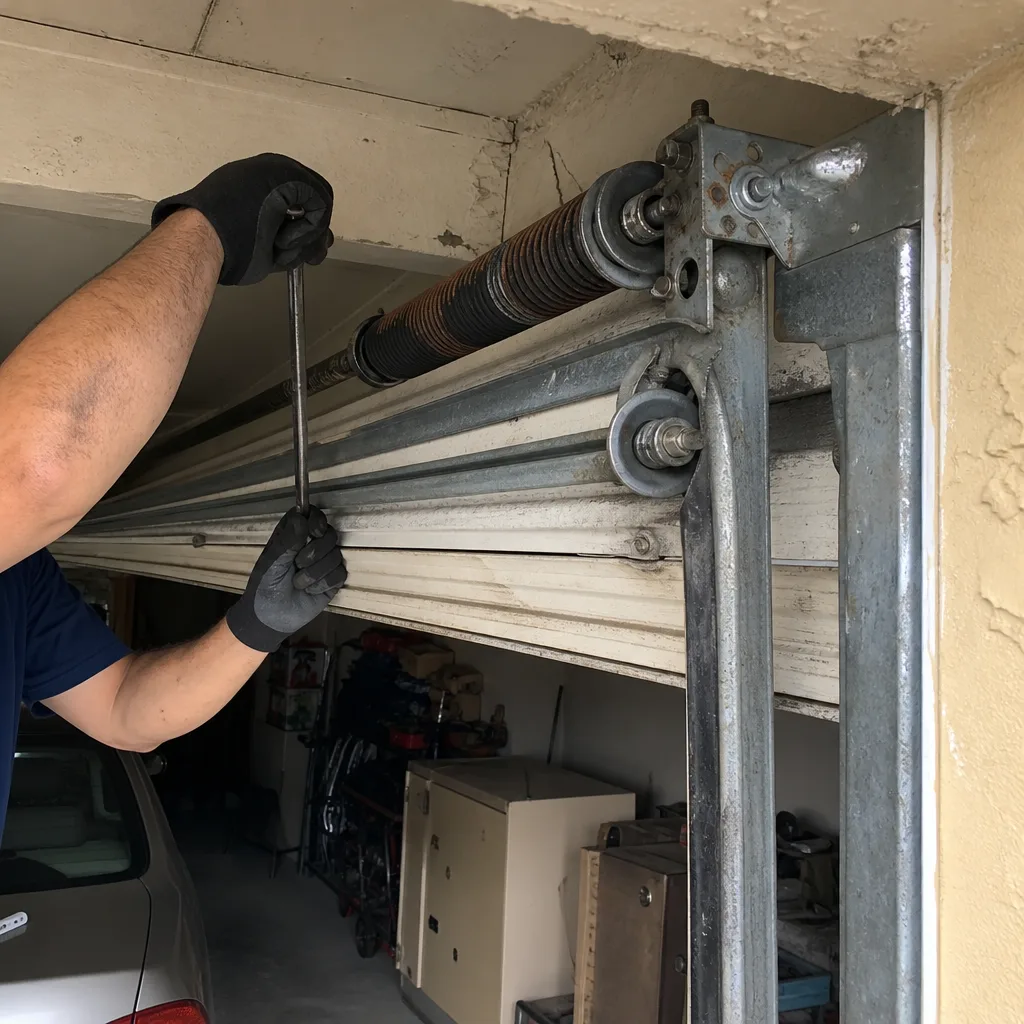 Before
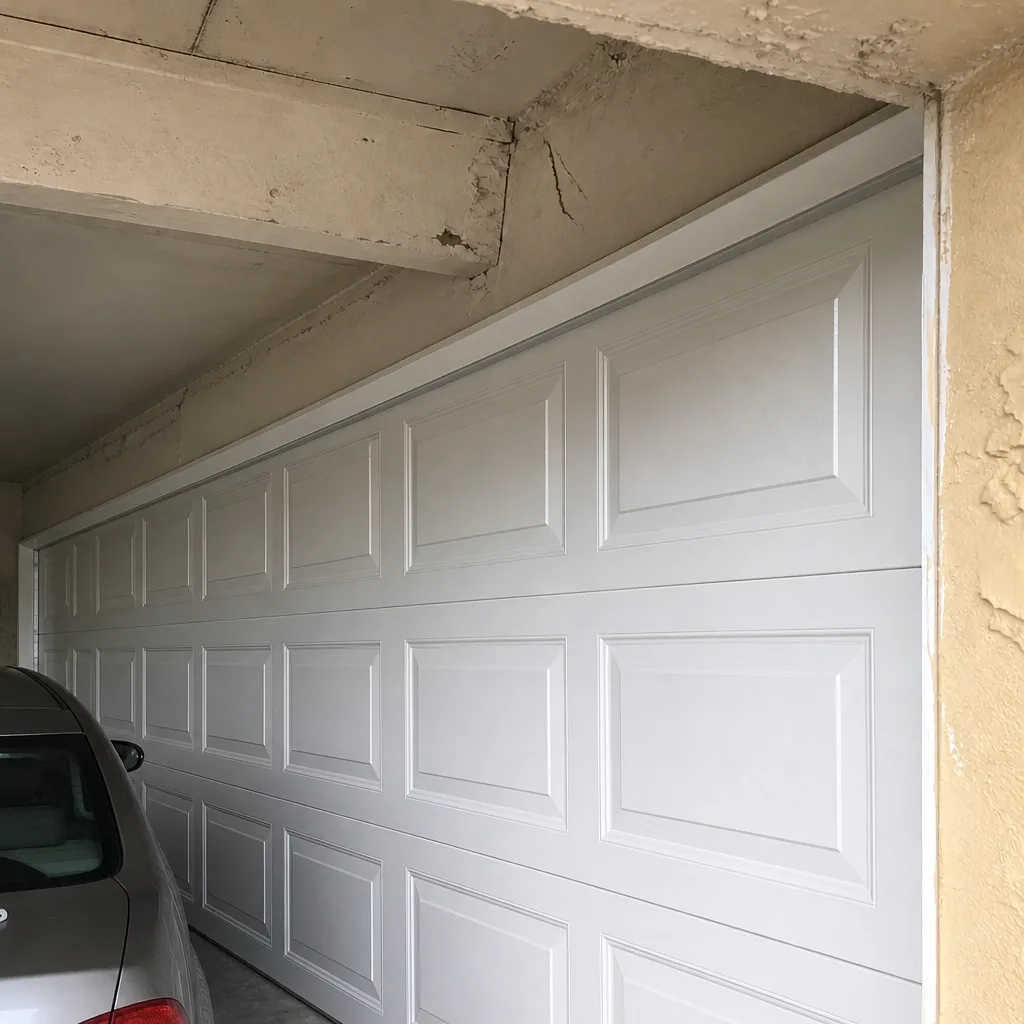 After
 Before
 After
 Before
 After