
Last updated October 31, 2026
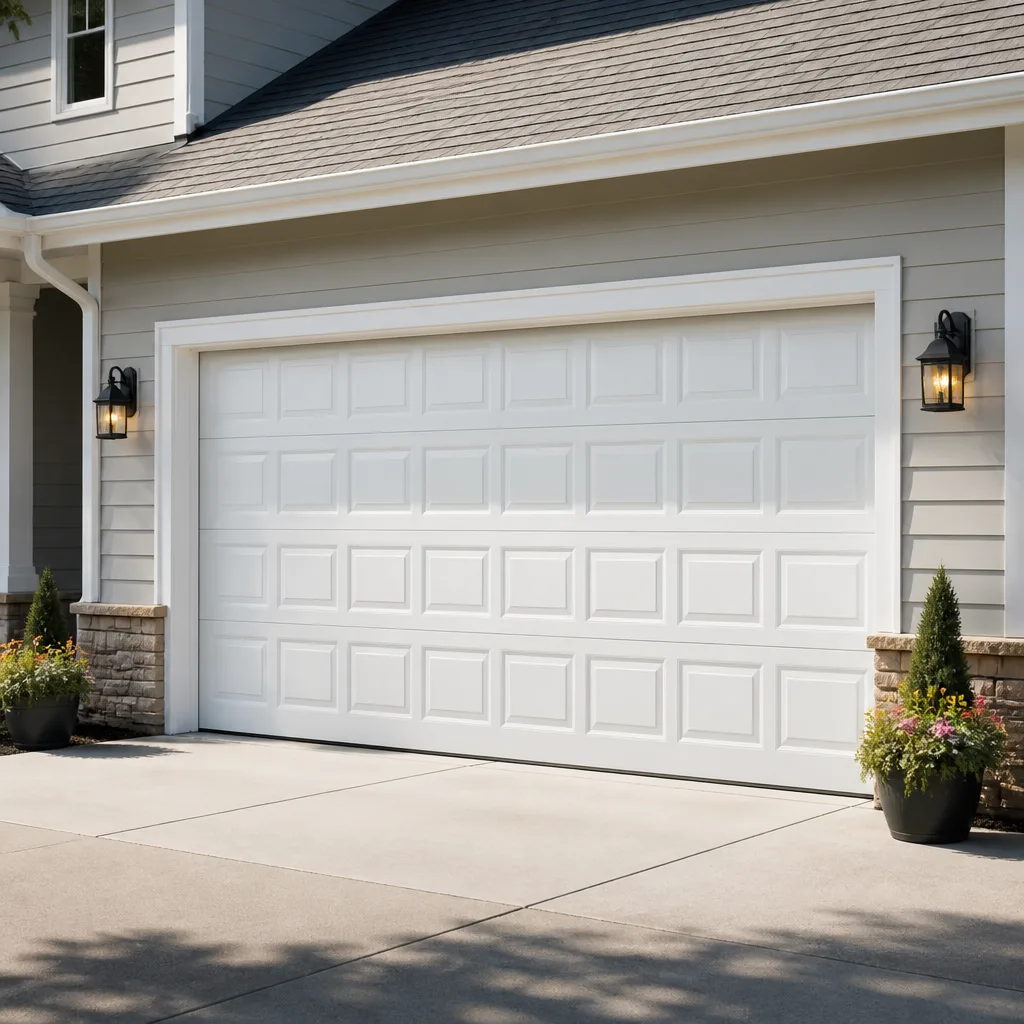 Raised-panel steel
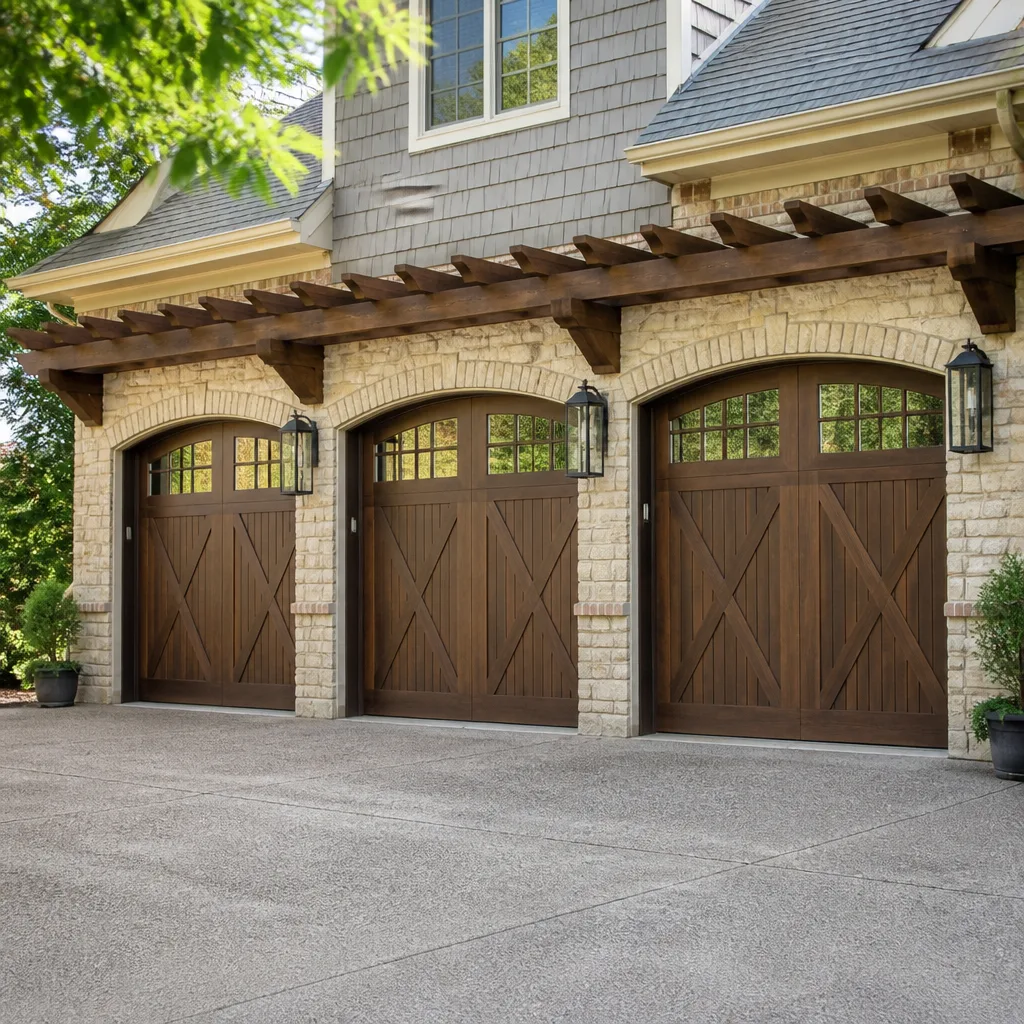 Carriage house
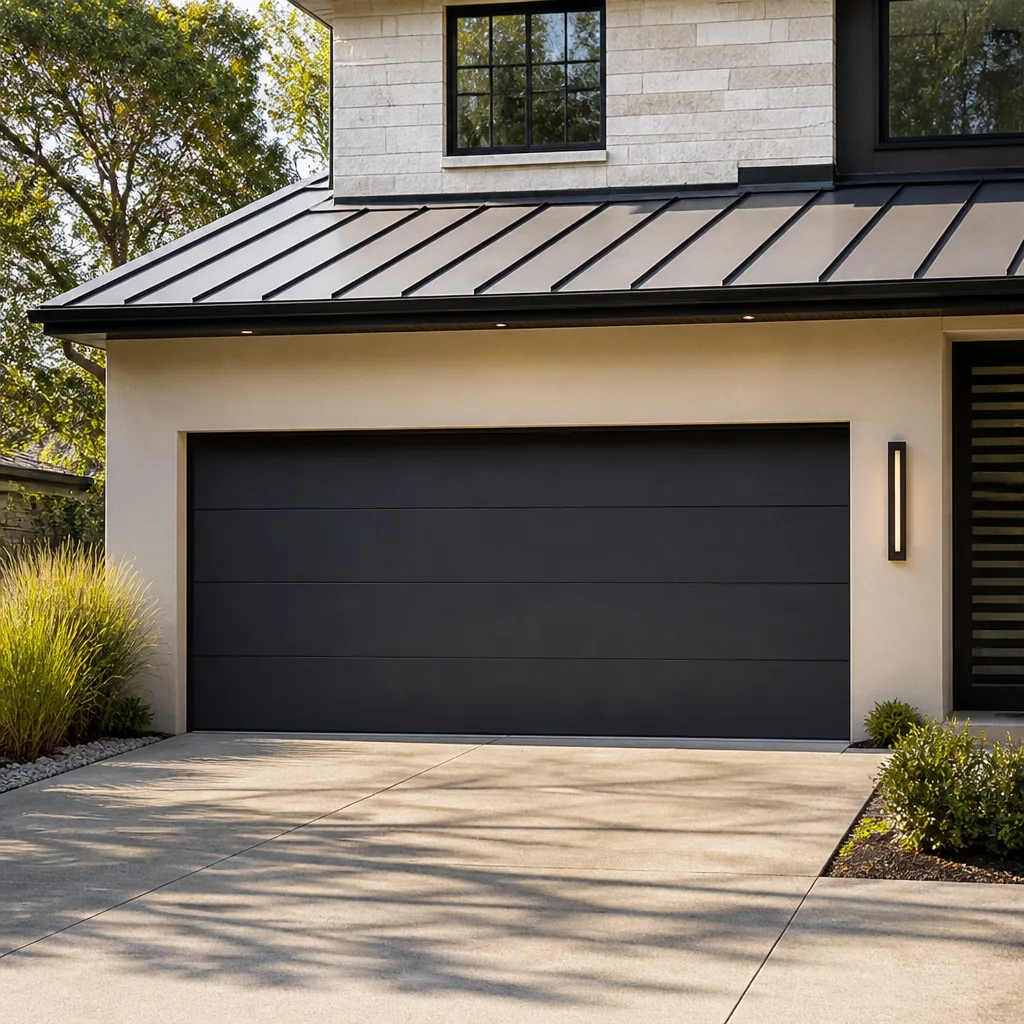 Modern flush
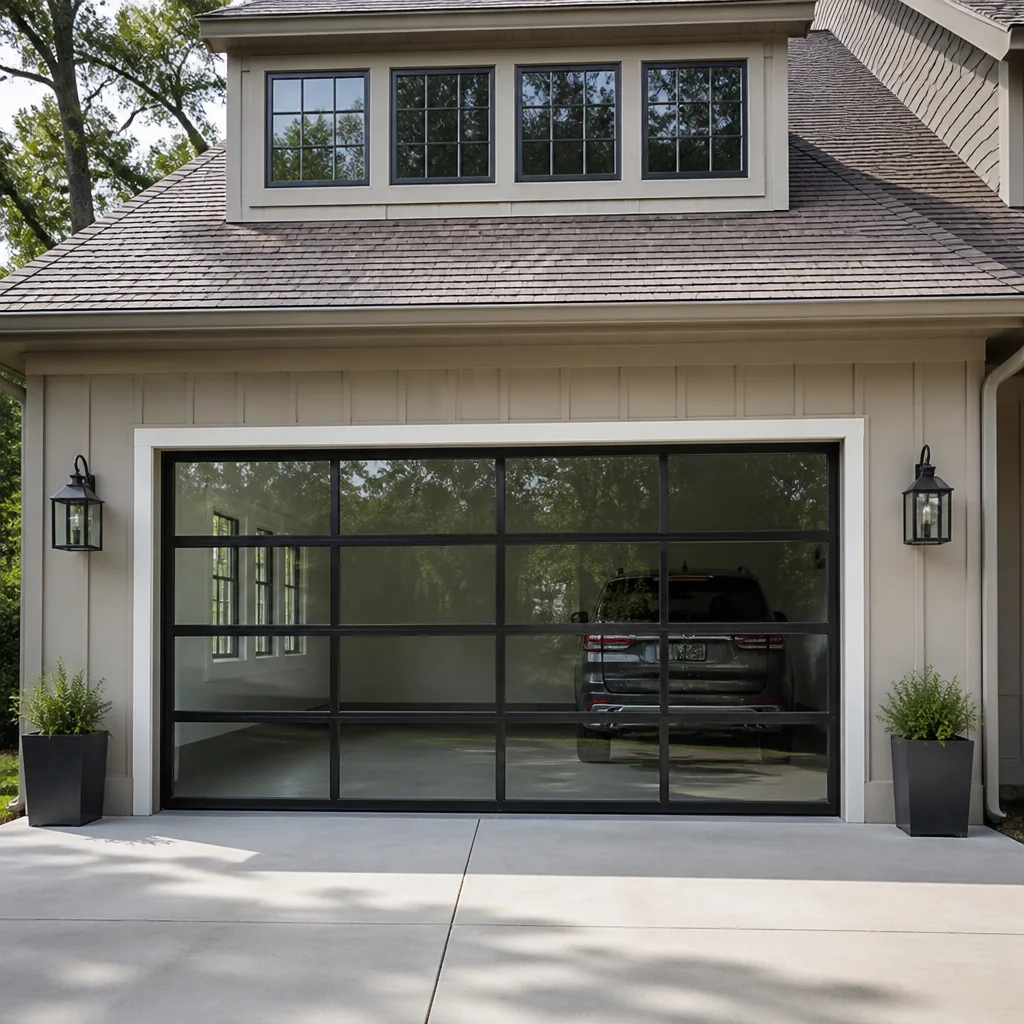 Full-view glass
 LiftMaster openers
 Chamberlain openers
Full 25-point door and opener safety check with every visit - springs, cables, rollers, tracks, and your LiftMaster or Chamberlain opener included
You get a price before we start. It does not change when the truck arrives.
Get your free estimateGarage Door Repair Troubleshooting in Fort Myers: Common Problems and How to Fix Them
Most garage door breakdowns aren’t random failures. They’re predictable, traceable, and usually the result of one small component wearing out while everything else keeps working. The problem is, most homeowners fix what they SEE, not what’s actually failing. They replace batteries when the issue is a misaligned sensor. They tighten bolts when the real culprit is a dying capacitor. In Fort Myers, where humidity and salt air chew through metal parts faster than inland climates, misdiagnosis costs homeowners real money every single day. This guide teaches you to read your door’s behavior the way a technician reads it: by sound, by movement pattern, and by knowing what breaks first.
Styles & brands we work with
- Raised-panel steel
- Carriage house
- Modern flush
- Full-view glass
- LiftMaster openers
- Chamberlain openers
Quick Answer
Most garage door problems fall into one of four categories: power issues (opener not responding), sensor or safety-reverse issues (door won’t stay closed), mechanical wear (grinding, sticking, uneven movement), or spring and cable failure (door won’t lift or drops too fast). The fastest diagnostic is to unplug the opener, pull the emergency release cord, and lift the door by hand. If it moves smoothly and stays put, the problem is the opener. If it’s heavy, jerky, or won’t lift, the problem is mechanical. That two-minute test eliminates half the guesswork before you touch a single tool.
Table of Contents
- The Symptom-to-Cause Diagnostic Map
- How to Tell an Opener Problem From a Door Problem (in Under 2 Minutes)
- Door Won’t Stay Closed: Seven Causes of a Reversing Door
- Sensor Misalignment: Why Fort Myers Weather Makes It Worse
- That Grinding Noise: What It Means and What It Costs to Ignore
- The Slow Door: A $8 Fix Most Homeowners Skip
- Broken Springs: When to Stop and Put the Tools Down
- Common Mistakes to Avoid
- When to Call a Professional
- Frequently Asked Questions
- The Bottom Line
The Symptom-to-Cause Diagnostic Map
Technicians don’t start by inspecting parts. They start by asking one question: “What does the door DO when you press the button?” The behavior tells you which system failed. Here’s the map we use on service calls across Fort Myers, organized by the problem you’re actually experiencing, not by the component you might not recognize.
If the door won’t open at all:
- No sound from the opener – Power supply issue, blown fuse, tripped GFCI outlet, or a dead opener logic board
- Humming but no movement – Stripped gear inside the opener, a seized motor bearing, or a broken spring preventing lift
- Clicking sound only – Failed capacitor or a broken solder joint on the opener’s control board
If the door opens but won’t close:
- Reverses immediately after touching the floor – Photo eye sensor misalignment or obstruction
- Reverses about 6-12 inches from the floor – Limit switch setting is off, or the close-force setting is too sensitive
- Stops mid-travel and reverses – Bent track, obstruction on the rollers, or a failing travel module
If the door moves but something’s wrong:
- Opens 2-3 inches then stops – Broken torsion spring (this is the big one, and we’ll get to it)
- Opens unevenly, one side higher – Broken cable on one side or a roller that’s jumped the track
- Shudders or vibrates while moving – Loose hardware, worn rollers, or a failing spring that’s lost tension on one side
If it makes noise:
- High-pitched squeal – Dry rollers, dry bearings, or a dry torsion spring
- Loud grinding or metal-on-metal – Worn roller bearings grinding against the track, or a stripped gear in the opener
- Rattling – Loose nut or bolt, usually on the track brackets or the opener rail
In our experience, four out of five service calls in Fort Myers are one of these patterns. The remaining twenty percent are genuinely unusual: lightning strikes on opener boards, salt corrosion on logic boards (we see this more in homes near the Caloosahatchee than inland), or a panel that’s rusted through at the bottom seal. The map above covers most of what you’ll encounter.
How to Tell an Opener Problem From a Door Problem (in Under 2 Minutes)
This is the single most useful diagnostic move we can teach you, and it requires zero tools. Disconnect the opener from the door, then test the door by hand. Here’s the step-by-step:
- Close the door fully. If the door is stuck open and won’t move, skip to step 3.
- Pull the emergency release cord. It’s the red handle hanging from the opener rail. Pull it straight down. You’ll hear a click and the carriage will disconnect from the opener’s drive chain or belt.
- Lift the door manually. Grab the handle or the bottom edge. Lift it to waist height and let go.
- Read what happens next.
If the door opens smoothly, stays where you leave it (at least halfway), and closes smoothly: The mechanical side of the door is fine. The problem is the opener: the circuit board, the safety sensors, the travel limits, or the motor itself. This is an opener repair call, specifically. You’ve just narrowed it down to a single component system rather than the whole door.
If the door is heavy, won’t stay put, jerks, or slams down: The problem is mechanical: broken or failing springs, worn cables, damaged rollers, or a bent track. The opener was simply the messenger. This is a garage door repair call, and it’s usually a spring replacement. Many Fort Myers garages built in the 1990s and early 2000s still have original torsion springs, and those don’t last forever. Not even close.
That’s the entire test. Opener, or door. Two minutes, no tools. Whether you call us for garage door opener repair in Port LaBelle or you need garage door repair in Port LaBelle, you’ll be describing the problem in terms a technician can act on immediately. And if you’re starting to think about a new door, this test tells you whether the old one is worth keeping. Sometimes it’s not, and we’ll help you think through garage door installation options without pushing a sale.
Door Won’t Stay Closed: Seven Causes of a Reversing Door
A garage door that reverses immediately after closing isn’t broken. It’s doing exactly what it’s designed to do. The problem is something is triggering a safety response, and there are seven distinct causes. Guessing wrong costs you a service call. Guessing right saves you one. Here’s the complete list, ranked by how common each cause is in Fort Myers.
1. Photo eye sensor misalignment (about 60% of reversing-door calls)
The two sensors sit on either side of the door, about six inches off the ground. They beam an invisible infrared signal between them. If that beam is interrupted or the sensors aren’t perfectly aligned, the opener refuses to close. The fix is usually a matter of bending the sensor bracket a few degrees or clearing a leaf from in front of the lens. We cover this in detail below because Fort Myers weather creates a specific failure pattern.
2. Obstruction on the close path (about 15%)
A broom handle leaning against the wall, a kids’ bike, a garden hose that’s shifted. The door’s force sensor detects resistance and reverses. Remove the obstruction, run the door again.
3. Limit switch set too sensitively (about 10%)
The close limit tells the opener where “all the way down” is. If it’s set even slightly past the floor, the door hits the ground, feels resistance, and reverses. This usually shows up after a power outage, a lightning strike, or a new opener installation.
4. Close-force adjustment set too low (about 5%)
Your opener has a force dial that controls how much resistance it expects before reversing. If a technician set it very sensitive, or if the door has gotten slightly heavier due to spring wear, the opener may “think” it’s hitting an obstacle when it’s just doing normal work.
5. Worn or dirty rollers (about 4%)
Rollers with flat spots, rust, or built-up grime create friction that the opener reads as an obstruction. This shows up as a door that closes halfway, hesitates, then reverses.
6. Rusted or damaged track (about 3%)
In Fort Myers, salt air accelerates rust on exposed garage door tracks, especially in homes within two miles of the coast. A rust pock or dent can catch a roller and trigger a reversal.
7. Logic board failure (rare but real)
If everything above checks out, the opener’s logic board may be misreading sensor input. This is more common after power surges, and it’s more common with older LiftMaster and Craftsman units from the 2000s and early 2010s. At that point you’re looking at an opener diagnosis, not a sensor adjustment.
Sensor Misalignment: Why Fort Myers Weather Makes It Worse
Garage door photo eye sensors fail for the same mechanical reasons everywhere, but Fort Myers adds an environmental wrinkle: afternoon thunderstorms. Here’s the specific pattern we see dozens of times every summer.
It’s late afternoon. A storm rolls through. The garage floor gets damp, and the metal tracks and sensor brackets cool quickly while the air stays warm and humid. That temperature swing causes the metal brackets to contract slightly. If a sensor was already borderline, that small shift pushes it out of alignment. Now the beam misses the receiver, and the door won’t close. The homeowner presses the button three times, the door reverses three times, and they call us thinking the opener is dead. It’s not. It’s a bent bracket and a millimeters-wide misalignment.
Here’s how to correct it without a service call:
- Locate both sensors. They’re mounted six inches off the floor, one on each side of the door opening. One has a green LED, one has a red or amber LED.
- Check the indicator lights. If the green light is on but the other is flickering, blinking, or off, the beam isn’t reaching the receiver.
- Wipe the lenses. Dirt, spider webs, and salt film (coastal homes especially) block the infrared signal. A dry cloth does the job.
- Check for visual alignment. Crouch down and sight along the top of the sensor. It should point directly at the lens of the sensor across the door.
- Adjust the bracket by hand. Most sensor brackets bend with thumb pressure. Nudge the sensor up, down, left, or right until the receiving light turns solid.
- Tighten the wing nut once aligned. If it’s loose, the next storm or even a passing truck’s vibration will move it again. A tiny drop of threadlocker prevents repeat failures.
- Test the door. Close it fully. If it reverses, clean and realign once more. If it still reverses, the problem is no longer the sensor, and it’s time to suspect the limit switch or the force setting.
If you’ve done all seven steps and the door still won’t cooperate, the sensor itself may have failed, or the opener’s board has stopped reading it. That’s where a dedicated opener diagnostic is worth the call. Fort Myers Garage Door Service handles sensors, opener boards, and everything in between as part of our garage door opener repair service area, and we carry sensor units for LiftMaster, Chamberlain, Genie, Craftsman, and Raynor on the truck. No waiting for parts.
That Grinding Noise: What It Means and What It Costs to Ignore
A grinding garage door is never a good sign, and the longer you ignore it, the more expensive the repair gets. But not all grinding is created equal. The location and timing of the sound tell you what’s failing.
Grinding from the opener housing (top of the rail, motor area)
If the grinding comes from the opener unit itself, the likely culprit is a stripped gear. Most residential openers, including LiftMaster and Craftsman chain-drive models, use a plastic internal gear. It’s designed to fail before the motor does, in the same way a fuse protects a circuit. After 8-12 years, that gear’s teeth wear down. You’ll hear a grinding or chattering sound when the door operates, and the door may move in short jerks. The fix is a gear replacement, which is a standard opener repair. The gear costs under $30, but it’s a partial opener disassembly, and it’s not a job we’d recommend for a first-time DIYer.
Grinding from the door itself
If the sound tracks along with the door as it moves, you’re hearing metal-on-metal contact. The usual suspects:
- Worn roller bearings: Rollers with ball bearings that have rusted or seized will scrape against the track instead of rolling smoothly. The roller itself may still look round, but the bearing is frozen inside.
- Track misalignment: If the vertical track has shifted even a quarter inch, the roller will catch on the edge as it passes through. You’ll hear the sound at the same point on every cycle.
- Dry torsion spring: A dry or rusted spring can creak and grind, especially in the morning when it’s cool. This is a lubrication issue, not a component failure, but a dry spring accelerates wear.
The cost of ignoring grinding: a $15 roller replacement becomes a $120-plus track replacement when the grating wears through the track. A dry spring that should cost $8 to grease becomes a spring replacement at $250-400 when friction causes a coil to snap. In Fort Myers specifically, we see salt-corrosion grinding in coastal neighborhoods like Cape Coral and Sanibel-adjacent communities, but the same issue shows up inland too, just on a slower timeline.
If you’re technically inclined, you can replace a visibly worn roller with the door in the down position, but never, ever remove the bottom bracket on your own. That bracket is under constant spring tension, and removing it without the proper winding-down procedure can send parts through the garage wall. This is a stopping point. If the roller in need of replacement is attached to the bottom bracket, call a professional. Fort Myers Garage Door Service has been servicing this area for years, and we’d rather replace a $15 roller safely than wait until a homeowner hurts themselves trying to save money. Garage door repair in Port LaBelle and throughout Fort Myers includes roller and track work, and we quote the price before we start. Always.
The Slow Door: A $8 Fix Most Homeowners Skip
Here’s the scenario we hear constantly: “The opener motor is getting weak. The door takes forever to open now.” Then the homeowner starts shopping for a new opener. In most cases, the opener is fine. The door is just binding, and the fix costs less than a fast-food lunch.
Garage doors don’t have a lot of moving parts compared to a car engine, but the parts they do have need lubrication. The rollers, hinges, springs, and bearings all slide or roll against each other hundreds of times per year. When the factory grease dries out (which happens in 2-3 years in Fort Myers humidity cycles), friction builds. The opener’s motor works harder to overcome that friction, moving the door more slowly. The homeowner interprets this as a motor problem. It’s actually a maintenance problem.
Here’s the $8 fix:
- Buy the right lubricant. White lithium grease for the tracks and hinges. Garage door-specific spray lubricant (or silicone spray) for the torsion spring and rollers. Do NOT use WD-40. WD-40 is a solvent and degreaser, not a long-term lubricant. It will strip what lubrication remains and leave the metal drier than before.
- Unplug the opener and close the door. Work on a closed door. Less tension, less risk.
- Clean the tracks of built-up gunk. A damp cloth removes years of Florida dust and garage grime. If you see rust, a light scrub with steel wool takes it off.
- Lubricate the rollers. If the rollers have exposed bearings, spray the bearing area where the wheel meets the shaft. If they’re sealed, a light coat on the outside edge is fine.
- Lubricate the hinges. Every hinge pivot point, both sides of the door.
- Lubricate the torsion spring. Spray the entire length of the spring. It will flex and spread the lubricant as it operates.
- Run the door 4-5 times to work the lubricant in.
We’ve seen doors that took 20-plus seconds to open drop to under 12 seconds after this ten-minute job. Morning stiffness, squealing, and that “weak motor” impression often disappear entirely. But if the door is still slow after lubricating, the problem is likely spring tension. Springs lose tension as they age, making the door “heavier” for the motor to lift. That’s not an opener failure, and it’s not a lubricant issue. It’s a mechanical problem that needs a spring adjustment or replacement. Our garage door repair team can assess spring tension in a visit, and we always recommend what your door needs, not what’s easiest to bill.
Broken Springs: When to Stop and Put the Tools Down
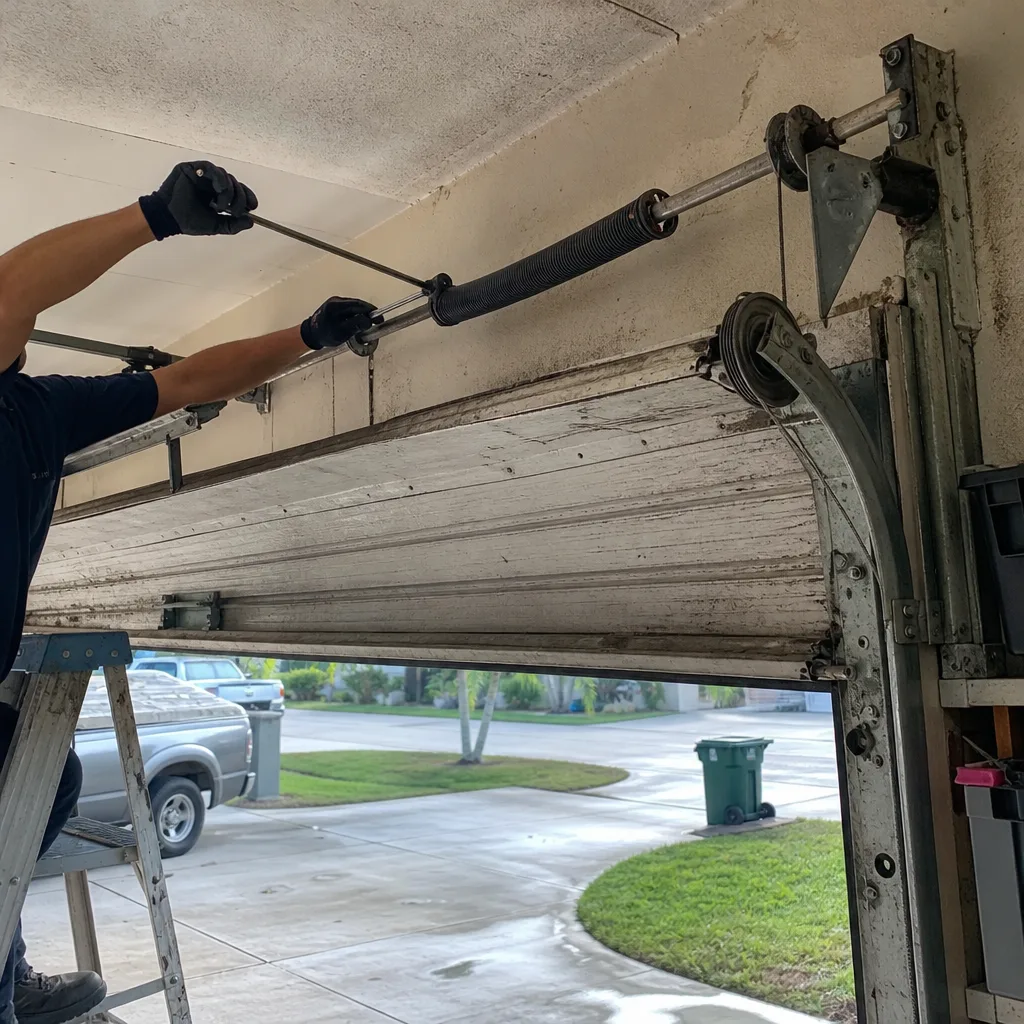
Here’s the hard truth about torsion springs: they store enormous amounts of mechanical energy. A wound torsion spring on a standard residential garage door is holding anywhere from 100 to 250 pounds of force, depending on the door’s weight. When a spring breaks, it releases that energy instantly. The sound is a loud bang, like a firecracker or a dropped weight. If you’re standing next to it, the consequences can be serious.
There are two types of springs on residential garage doors:
Torsion springs
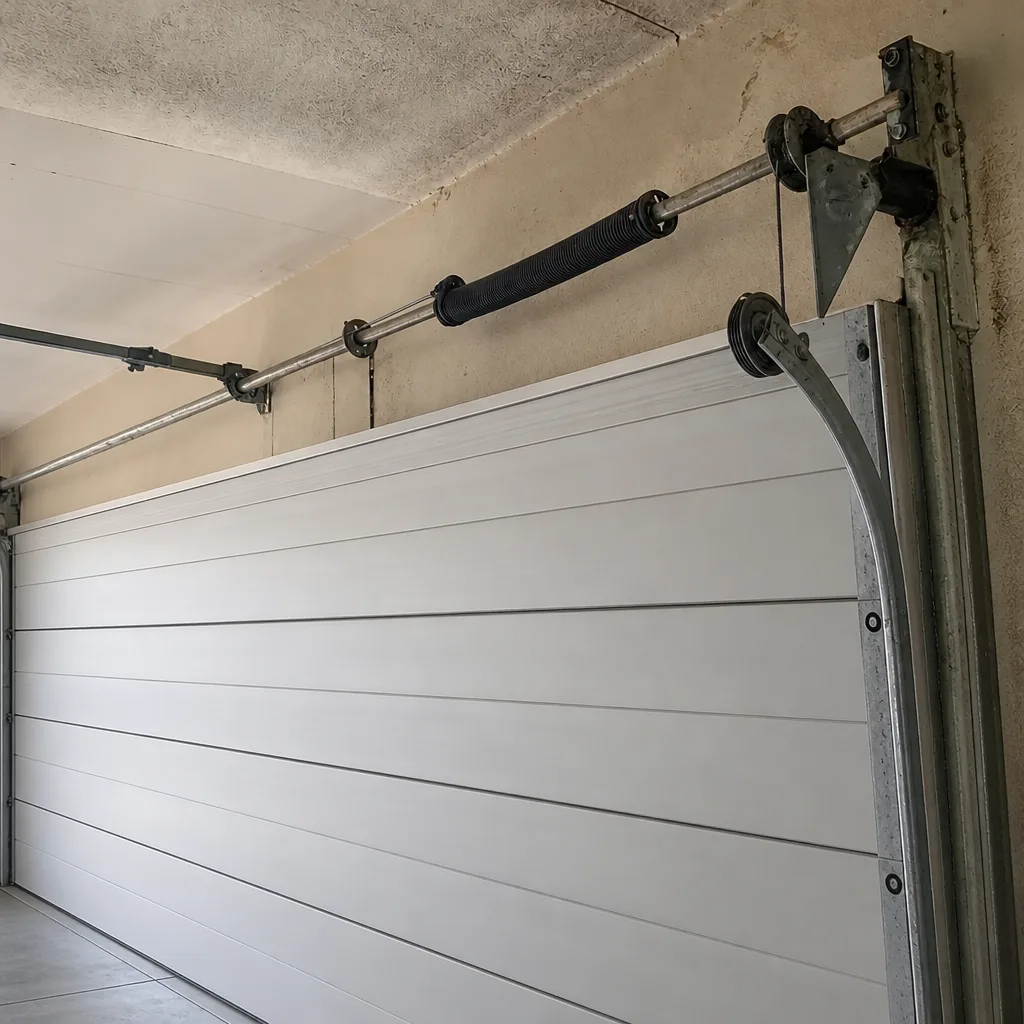
Mounted horizontally above the door opening, usually one on each side of center. These are the springs that break with a bang. They’re under constant tension, and they wind and unwind as the door opens and closes. A torsion spring replacement involves unwinding the old spring (if it hasn’t already broken), carefully removing it, measuring the wire gauge and length for a match, and winding a new spring to the correct tension. This is a skilled job requiring specific winding bars and a working knowledge of spring physics. Do not attempt this as a DIY project. End of sentence.
Extension springs
Mounted along the horizontal tracks on either side of the door, running parallel to the track. They stretch when the door closes and contract when it opens. Older doors (pre-2000s) in Fort Myers are more likely to have extension springs than torsion springs. They’re slightly less dangerous when they break, but they still store significant force, and they should have a safety cable running through the center to contain the spring if it snaps. If that safety cable is missing, a broken extension spring becomes a projectile.
Signs your spring is about to fail:
- Visible gap in the spring coil: A torsion spring that’s separated into two pieces, usually near the center
- Door opens 2-3 inches and stops: The opener can’t lift the full weight without the spring’s assistance
- Door slams shut when you release it manually: The spring’s counterbalance is gone
- One side of the door hangs lower than the other: A broken cable on one side, often caused by a broken spring that overloaded the cable
In Fort Myers, springs wear out faster than the national average. Humidity causes surface rust, and rust creates friction points on the coils. Salt air in communities near the coast accelerates the process. A spring that would last 10,000 cycles in a dry climate might only last 6,000-7,000 here. We replace broken springs on a regular basis, and we always quote the price before starting work. You never get surprised by an invoice after we’re done. If your spring has broken, call (833) 589-8278 for a free estimate. Do not try to install a new spring yourself. This is the one job where “calling a specialist” isn’t caution, it’s common sense.
Common Mistakes to Avoid
These are the specific errors we see homeowners make in Fort Myers, week after week. Avoiding them saves you money, time, and occasionally a trip to urgent care.
- Lubricating a broken spring. If you hear a bang and then the door won’t lift, lubrication is not the answer. That spring is done. Adding lubricant won’t un-break it, but it might make the broken ends slippery enough to slip under your grip while you’re inspecting. The fix is a spring replacement, full stop.
- Using WD-40 on everything. WD-40 is a penetrating oil and water displacer. It’s fantastic for freeing rusted bolts and cleaning gunk, but it’s a terrible garage door lubricant. It evaporates quickly and leaves metal dry. The right product is white lithium grease or silicone spray made for garage doors.
- Blocking the photo sensor to “fix” the reversing problem. Some homeowners tape the sensors together or point them at each other permanently to stop the door from reversing. Congratulations, you’ve disabled the safety system designed to prevent the door from crushing your kid’s bike (or your kid). This is dangerous, and it’s also a code violation for any rental or sale inspection.
- Running the door with a broken spring. If the door is heavy and won’t stay up, continuing to run it with the opener places massive strain on the opener motor and the cables. You convert a $300 spring replacement into a $700-plus job that includes a burned-out opener and snapped cables.
- Adjusting the spring tension without winding bars. Using screwdrivers, rebar, or “whatever fits” to wind a torsion spring is a recipe for a serious injury. Technician-grade winding bars cost $20. A hospital visit costs more. And if you want to get technical, winding a torsion spring improperly can over-tension it, causing it to snap early and drop the door.
- Ignoring a door that’s visibly crooked. A garage door that’s level on the left but low on the right is telling you a cable has slipped or a spring has broken on one side. Continuing to run the opener will cause the rollers to jump track, and a door off-track is a two-person job to safely re-seat, minimum.
- Replacing the entire door when the opener is what failed. This happens more than you’d think. The opener dies, and the homeowner assumes the whole system is ancient and starts shopping for a new door. If the door panels, tracks, and springs are in decent shape, a new opener is a fraction of the cost and solves the problem. Any qualified technician should tell you this before quoting you a new door.
When to Call a Professional
Here’s a straight answer, no hedging: certain garage door problems are not DIY territory, and continuing to troubleshoot them makes the problem worse and sometimes makes it dangerous. Call a professional when: the spring is broken (loud bang, visible gap, door won’t lift); the door is off its track (roller has come out of the track, door is hanging crookedly); a cable is frayed, snapped, or loose; the door slams shut under its own weight; or you’ve done the sensor alignment and lubrication steps and the problem persists. These are mechanical failures under load. They don’t fix themselves, and the fix involves tensioned parts that can cause serious injury when handled incorrectly.
Fort Myers Garage Door Service offers free estimates in Fort Myers. Call (833) 589-8278 and we’ll quote the repair before any work starts. If you’ve been wrestling with a stubborn door for a week, you deserve a straight answer. That’s what we give.
Frequently Asked Questions
Most garage door repairs in Fort Myers run between $125 and $400, depending on the specific part and labor involved. A broken torsion spring replacement typically falls in the $250-400 range, while a sensor replacement or roller replacement is usually under $200. The exact price depends on your door’s size, the type of spring, and the brand of opener in place. Fort Myers Garage Door Service quotes every repair before we begin, so there’s no surprise on the back end. Call (833) 589-8278 for a free estimate on your specific issue.
Some opener issues are DIY-friendly, like replacing remote batteries, reprogramming a keypad, or tightening a loose chain or belt. Other opener repairs, like replacing a stripped gear, a failed logic board, or a seized motor bearing, require partial disassembly and electrical testing. If you’re comfortable with basic mechanical work and you can identify the specific failure, a gear replacement is doable. If you’re guessing, the odds of misdiagnosing and spending money on the wrong part are high. We carry parts for LiftMaster, Chamberlain, Genie, Craftsman, Raynor, and other brands on our truck, which saves you the delay of waiting for a shipped part.
A door that reverses when closing is responding to a safety input: the photo eye sensor is misaligned, something is obstructing the beam, the close-force setting is too sensitive, or the door is hitting resistance from worn rollers or a track obstruction. Start by checking the sensor lenses and alignment, then clear anything in the door’s path. If it still reverses, the limit switch or force setting may need adjustment, and if that doesn’t resolve it, the opener’s logic board may be the culprit.
Most torsion springs are rated for 10,000 cycles, which translates to roughly 7-9 years of normal use in a two-car household. In Fort Myers, humidity and coastal salt air reduce that lifespan to about 5-7 years on average. If your spring is nearing or past that age, and the door is getting heavier to lift, plan for a replacement before it breaks. A planned spring replacement is cheaper and more convenient than an emergency one.
Yes. Fort Myers Garage Door Service is certified to service eight major garage door brands: LiftMaster, Chamberlain, Genie, Clopay, Amarr, Wayne Dalton, Craftsman, and Raynor. Whatever brand is on your garage, we work on it. We also install new doors from a multi-brand catalog, so your replacement options aren’t limited to one manufacturer’s lineup.
In many cases, yes. Because opener repair is a dedicated specialty for us rather than an afterthought, we stock common opener components for LiftMaster, Chamberlain, Genie, Craftsman, and Raynor on the truck. That means many opener faults can be diagnosed and fixed on the first visit. If your opener issue requires a specific board or motor we don’t carry, we’ll quote you the repair and the timeline before starting. Call (833) 589-8278 to describe your opener’s symptoms, and we’ll tell you what we think it is before we even arrive.
The Bottom Line
Garage door problems follow predictable patterns. The door’s behavior, the sounds it makes, and the timing of the failure tell you which component broke. Learn to read those signals, and you’ll save yourself hours of frustration and unnecessary parts spending. The two-minute opener-versus-door test is the fastest way to narrow any problem down. The lubrication maintenance steps fix a surprising number of “motor failure” complaints. And the spring and self-repair warnings keep you from turning a $300 repair into a hospital bill. The takeaway: diagnose by behavior, not by guesswork.
When you’re ready to stop guessing, Fort Myers Garage Door Service covers the full lifecycle: repair, opener-specific diagnostics and repair, and new installation. Fort Myers Garage Door Service home is your starting point for any door issue. And if you’re in the Port LaBelle area specifically, we offer dedicated garage door repair in Port LaBelle and garage door opener repair in Port LaBelle. If your door is beyond repair and you need a full replacement, explore garage door installation in Port LaBelle for options across Clopay, Amarr, Wayne Dalton, Raynor, and others. Call (833) 589-8278 for a free estimate. We quote the price before we touch a tool.
Written by the team at Fort Myers Garage Door Service, serving Fort Myers since 2015.
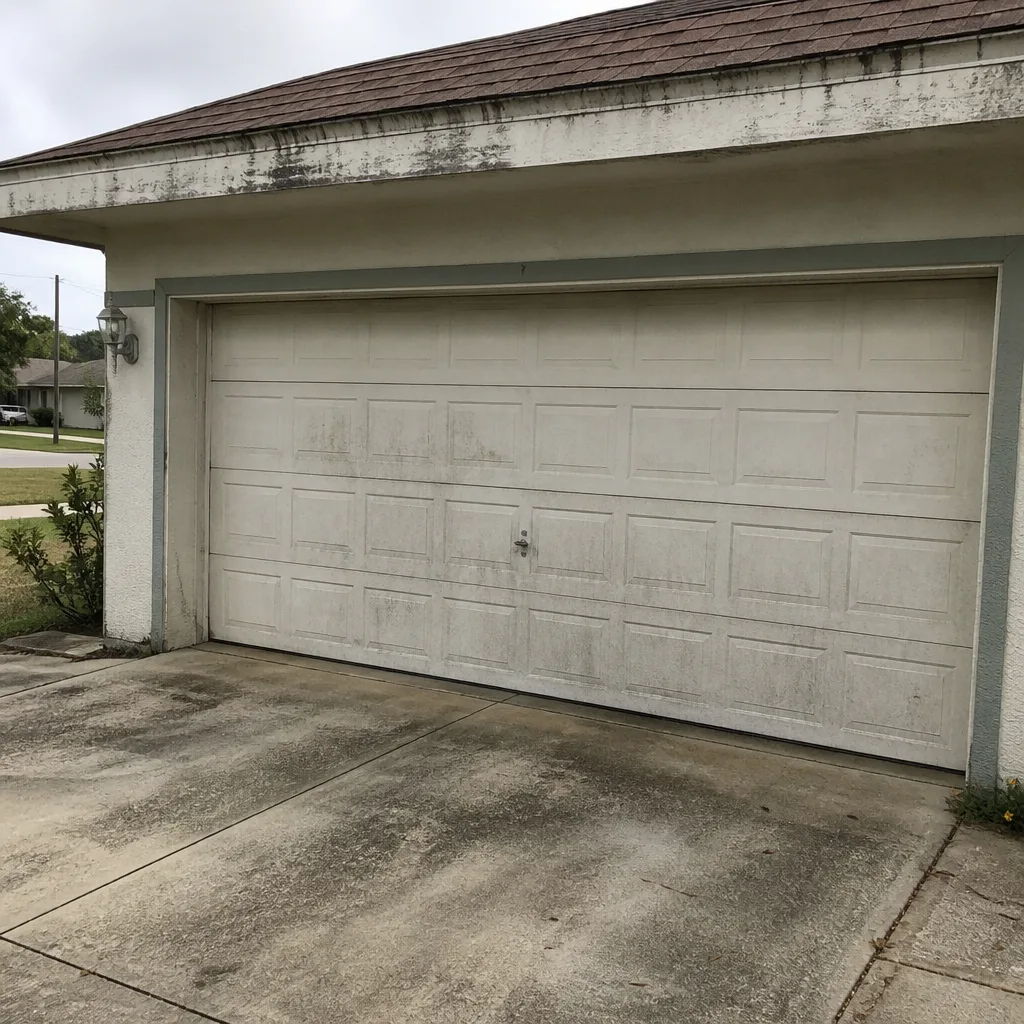
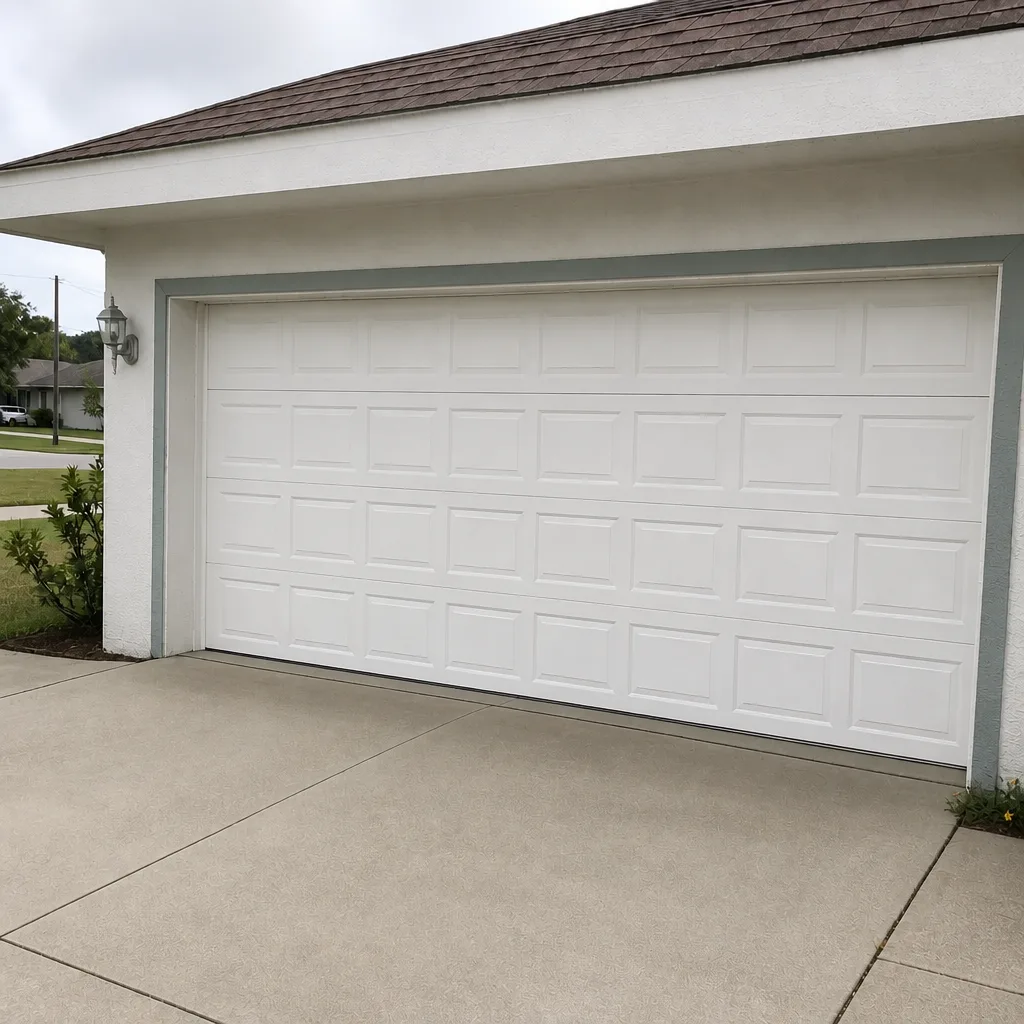
See the difference
 Before
 After
 Before
 After
 Before
 After