
Last updated October 31, 2026
 Raised-panel steel
 Carriage house
 Modern flush
 Full-view glass
 LiftMaster openers
 Chamberlain openers
Full 25-point door and opener safety check with every visit - springs, cables, rollers, tracks, and your LiftMaster or Chamberlain opener included
You get a price before we start. It does not change when the truck arrives.
Get your free estimateGarage Door Repair Maintenance Checklist for Fort Myers Homeowners
A $12 can of silicone spray, used correctly twice a year, eliminates roughly 30% of the service calls we see from Fort Myers homeowners. The other 70% come from problems that were visible months earlier but nobody knew what to look for. This guide walks you through exactly what to check, when to check it, and why the Florida climate changes the maintenance schedule the manufacturer printed in your manual. For additional help, see our Garage Door Repair Troubleshooting in Fort Myers: Common Problems and How to Fix Them. By the time you finish reading, you’ll have a working checklist tailored to Fort Myers humidity, summer lightning storms, and salty coastal air.
Quick Answer
Garage door maintenance in Fort Myers should happen on three schedules: monthly visual checks of rollers, cables, and track alignment; quarterly lubrication with silicone spray on hinges, rollers, and springs; and a post-storm inspection after any named storm or severe thunderstorm. The single most important task for Florida homes is the bottom seal inspection, because a worn seal lets tropical rain and humidity into your garage.
Styles & brands we work with
- Raised-panel steel
- Carriage house
- Modern flush
- Full-view glass
- LiftMaster openers
- Chamberlain openers
Table of Contents
- Monthly Checklist: The Five-Minute Walkaround
- Quarterly Checklist: Lubrication and Deep Inspection
- Post-Storm Checklist for Fort Myers Homes
- Why Florida Humidity Changes Your Maintenance Schedule
- The Bottom Seal: Fort Myers’ Most Overlooked Defense
- What to Document and Photograph Annually
- How to Spot Spring Fatigue Before It Snaps
- Common Mistakes to Avoid
- When to Call a Professional
- Frequently Asked Questions
Monthly Checklist: The Five-Minute Walkaround
You don’t need tools for this. You need eyes and ears. Once a month, stand inside your garage with the door closed and work through this list in order. It takes five minutes and catches the majority of problems we fix in Fort Myers before they turn into breakdowns.
- Watch the door open and close once, fully. Listen for grinding, squealing, or rattling. A smooth door sounds smooth. A door that hesitates, jerks, or makes noise in one spot has a track or roller issue starting.
- Inspect the rollers on both sides. Nylon rollers with worn edges or cracks need replacement. Steel rollers with flat spots or rust are on their way out. In Fort Myers humidity, rust accelerates on steel hardware that isn’t coated.
- Look at the cables. The two cables running along each side should be tight and straight. Frayed strands, rust, or a cable that looks slack when the door is up means you need service before it snaps, which can be dangerous.
- Check the track alignment. The vertical tracks on both sides should be parallel. Look for gaps between the rollers and the track. If a roller sits deeper in one spot than another, the track may be bent.
- Test the auto-reverse feature. Place a piece of wood flat on the ground under the door and close it. The door should reverse within two seconds of touching the object. If it doesn’t, disconnect the opener and call a professional.
- Check the balance. Pull the red emergency release handle and manually lift the door halfway. A balanced door stays in place. One that drops or rises on its own has a spring problem.
We recommend visiting the Fort Myers Garage Door Service home page to see how these monthly checks connect to the repair work we handle across Lee County.
Quarterly Checklist: Lubrication and Deep Inspection
Every three months, set aside 20 minutes. This is the schedule that most prevents repair calls. Florida heat bakes lubricant off metal parts faster than the manufacturer’s standard schedule assumes, which is why we recommend quarterly lubrication here instead of the twice-yearly routine northern homeowners follow.
- Lubricate the rollers. Use a silicone-based spray, not WD-40. WD-40 is a solvent and will strip existing lubricant. Spray the roller bearings, not the roller itself, which can cause the door to slip in the track.
- Lubricate the hinges. Each hinge has pivot points. A quick spray on each side keeps them moving without stiffness. Stiff hinges force the door to work harder and strain the opener motor.
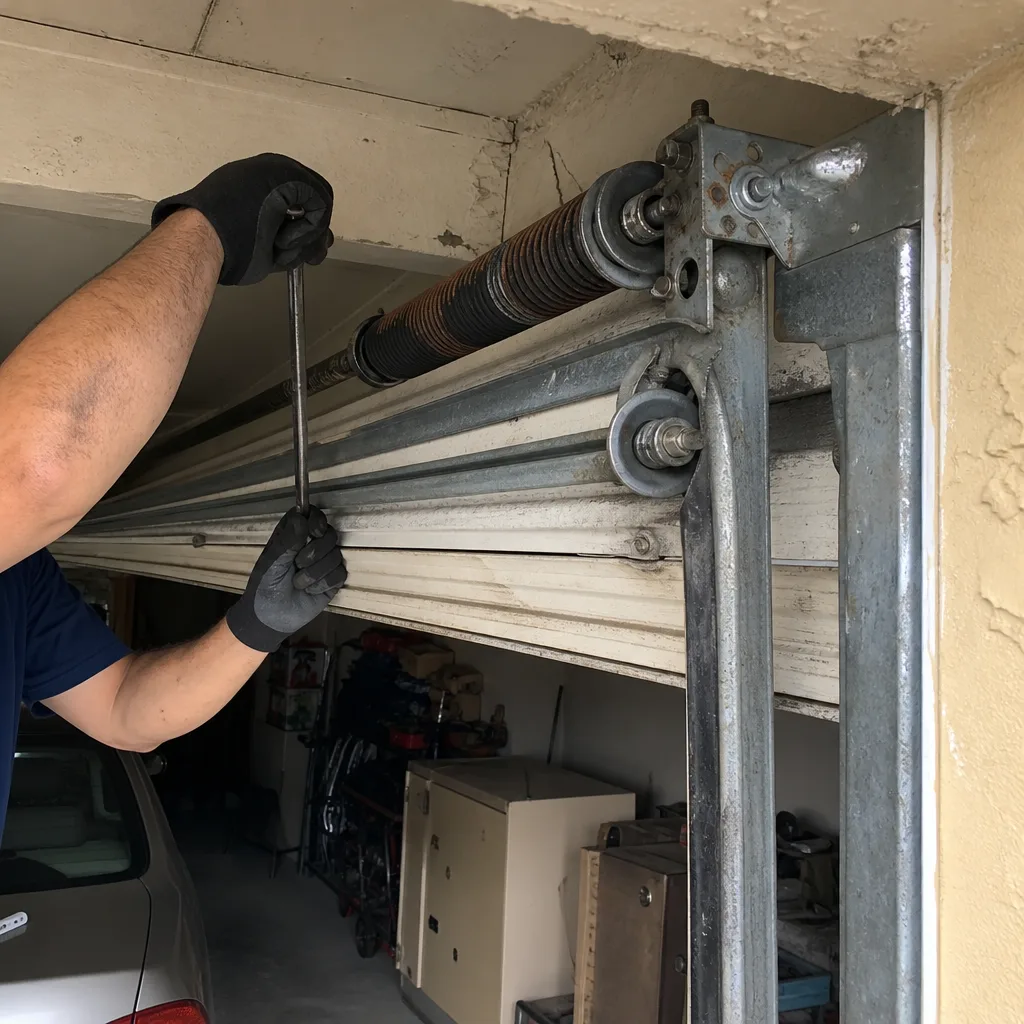
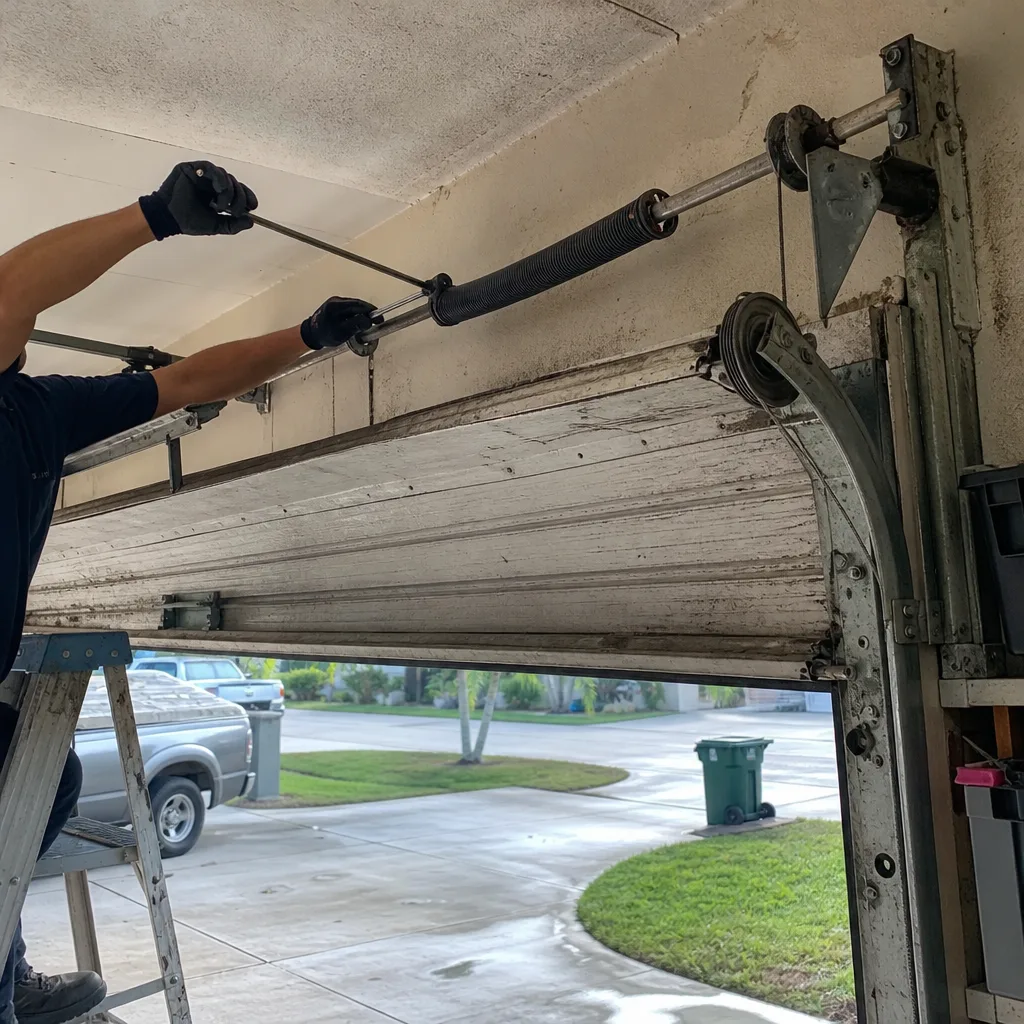
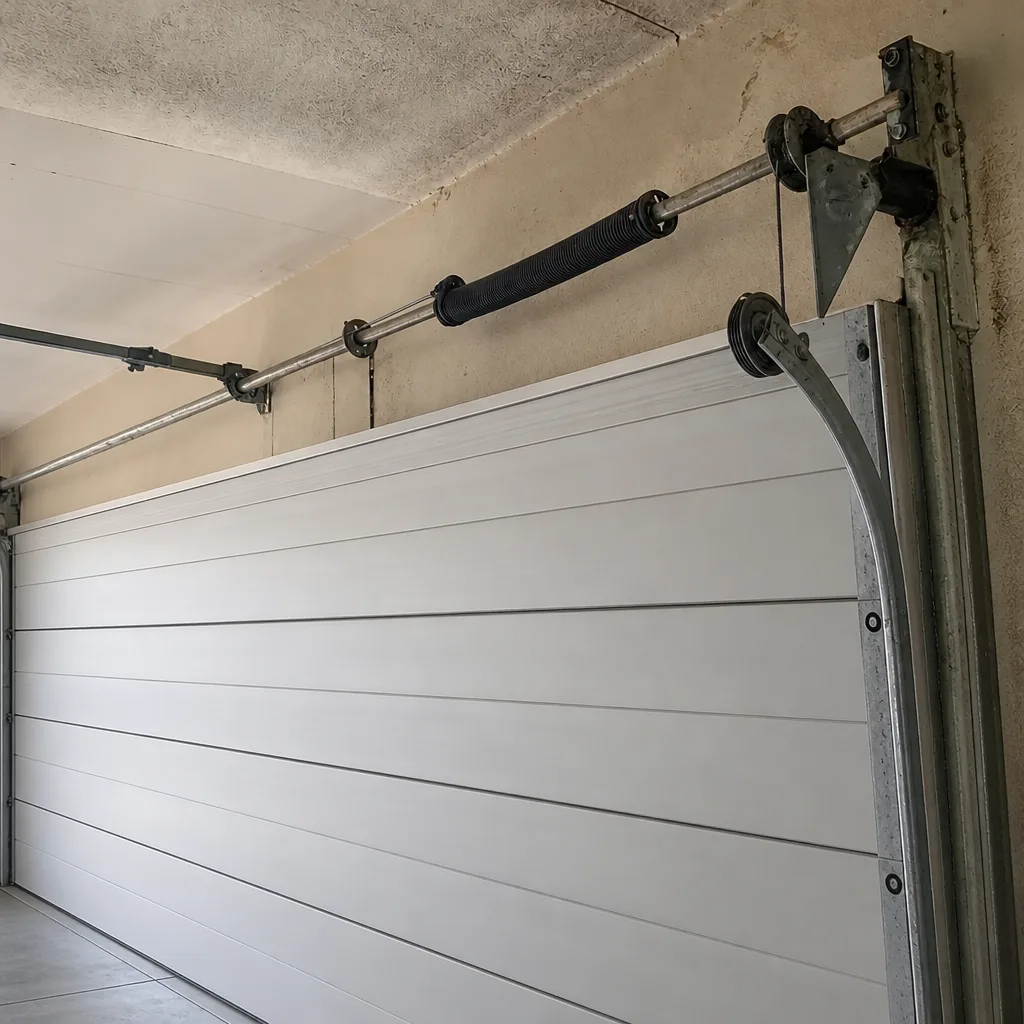
- Lubricate the torsion spring. This is the large spring above the closed door. Spray a light coat along the spring coils. Do not touch or adjust the spring; lubrication only.
- Lubricate the track sparingly. A light coating helps the rollers move. Too much attracts dust and grit, which builds up quickly in humid air and acts like sandpaper.
- Tighten visible bolts and screws. Vibration from opening and closing loosens hardware over time. A socket set or adjustable wrench handles most of this. Don’t overtighten track bolts, which can bend the track.
- Wipe down photo-eye sensors. The small sensors near the bottom of the track get coated in dust, spider webs, and humidity film. A dry cloth usually does it.
If you’re unsure about your specific opener or door model, our opener repair expertise covers Garage Door Opener Repair in Port LaBelle and surrounding areas with brand-specific diagnostics.
Post-Storm Checklist for Fort Myers Homes
Fort Myers sits in a hurricane zone. After any severe thunderstorm or named storm passes, run through this checklist before you open the door for the first time. Storm damage often isn’t obvious from inside the garage.
- Check for standing water inside the garage. If water pooled near the door, your bottom seal may have failed or the threshold may be damaged.
- Inspect the exterior of the door for dents, warping, or punctures. Flying debris can damage panels and compromise the door’s structural integrity. Aluminum and steel doors both dent, but steel holds up better to impact.
- Look at the tracks for shifting. High winds can push a door slightly out of alignment, bending tracks or pulling them from the wall. A misaligned track puts stress on everything else.
- Test the opener manually by pulling the release cord. Lift the door by hand before engaging the opener. If it binds or feels heavy, don’t run the opener until you know why.
- Check for electrical issues. Lightning strikes and power surges can damage opener circuit boards. If the opener won’t respond after power returns, the board may need replacement or repair.
- Look at the weatherstripping on all sides. Wind-driven rain gets past seals that look fine from a distance. Run your hand along the edges and feel for gaps or tears.
Storm damage often requires professional assessment. Garage Door Repair in Port LaBelle covers post-storm inspections for coastal and inland communities alike.
Why Florida Humidity Changes Your Maintenance Schedule
The manufacturer’s maintenance schedule in your Clopay, Amarr, or Wayne Dalton manual was written for a national audience. Southwest Florida is not a national-average climate. Humidity above 70 percent for most of the year changes how fast metal corrodes, how quickly lubricants break down, and how often hardware needs attention.
We see three specific humidity-driven failures in Fort Myers more than anywhere else. First, steel roller bearings rust and seize. The rust starts as a rough spot you can feel when you spin the roller by hand, then progresses to a grinding sound, and finally to a roller that doesn’t turn at all, which drags the door along the track and strains the opener. Second, torsion springs develop surface rust that weakens the metal over time. A rusted spring is more likely to snap, and spring failure is one of the most dangerous garage door problems a homeowner can face. Third, hinges corrode at the pivot points and become stiff, which forces the door to work against itself every cycle.
The practical takeaway: inspect rollers and hinges monthly instead of quarterly. Lubricate quarterly instead of twice a year. This is a heavier schedule than the manual recommends, but it’s the schedule that matches the environment.
The Bottom Seal: Fort Myers’ Most Overlooked Defense
If there’s one task on this entire checklist that directly prevents water damage during a Florida downpour, it’s the bottom seal inspection. The rubber strip along the bottom of your door ages in the sun and heat, cracking and losing flexibility. A seal that looks intact may be too stiff to actually seal against the floor.
Here’s what to check. Close the door and look along the bottom from inside the garage with the lights off. Sunlight showing through means a gap. Run your hand along the seal and feel for cracks, brittleness, or spots where it’s pulled away from the door. Check the ends especially; that’s where separation usually starts. And after a heavy rain, look for water staining on the floor inside the door line.
Replacing a bottom seal is straightforward work and inexpensive compared to the cost of water-damaged drywall, mold remediation, or ruined items stored on the garage floor. In Fort Myers, where afternoon thunderstorms are a summer constant, this single task pays for itself many times over.
What to Document and Photograph Annually
Once a year, take 15 minutes to photograph your garage door system. This creates a baseline you can reference if something fails, if you file an insurance claim after a storm, or if you need warranty service on a Genie opener or a brand-specific door component.
Photograph these specific items:
- The springs – both torsion springs above the door and extension springs along the sides if you have them. Note the color code on the ends; that code indicates the spring size and tension rating.
- The cables – close-up shots of both sides, showing the full length of each cable where it attaches to the bottom bracket.
- The rollers and hinges – one photo of each side showing all rollers in their tracks.
- The opener – the model number label, the chain or belt, and the wiring connections.
- The door panels – one photo of the full door from inside and outside, plus close-ups of any existing dents, scratches, or rust spots.
- The bottom seal – a close-up along the entire length where it meets the floor.
Store these photos in a folder on your phone or computer labeled with the date. If a spring snaps in June and you had photos from January showing it rusted, you have a much better case for warranty or insurance coverage than you would with no documentation.
How to Spot Spring Fatigue Before It Snaps
Garage door springs are under extreme tension, and when one fails, the release of that energy can be violent. The warning signs show up well before a snap if you know what to look at. In our experience across Fort Myers, most spring failures show at least one of these cues two to three months in advance.
Look at the gap between the coils. A healthy torsion spring has tight coils that sit close together. When you see coils separating, the spring is losing tension and approaching failure. Next, look for rust. Surface rust on a torsion spring isn’t always fatal, but pitting or flaking rust that digs into the metal weakens it significantly, and the humid air in Fort Myers accelerates this process. Listen for a louder-than-normal “pop” or creak when the door opens or closes; that’s the spring binding as the metal fatigues.
Also pay attention to the door’s balance. When a torsion spring weakens, the door becomes harder to lift manually and the opener has to work harder to move it. If your door feels heavy or the opener sounds strained, the spring is likely near the end of its life. Springs are rated for a certain number of cycles, typically 10,000, and once they exceed that count, failure becomes a matter of when, not if. This is one component where we strongly recommend leaving inspection and replacement to professionals, because the tension involved can cause serious injury if handled incorrectly.
Common Mistakes to Avoid
- Using WD-40 or penetrating oil instead of silicone spray. WD-40 strips existing lubricant and attracts dirt. For garage door maintenance in the Fort Myers climate, you want a silicone-based spray that repels moisture and doesn’t gum up in heat.
- Ignoring the auto-reverse test because the door “usually works.” The auto-reverse sensor is a safety device, not a convenience feature. Testing it monthly is the single most important safety check on this list.
- Adjusting or replacing springs without the right tools and training. Torsion springs hold enormous stored energy. Attempting DIY spring work without a winding bar and experience causes serious injuries every year, including right here in Lee County.
- Forgetting that Florida humidity means a faster schedule. The manual says lubricate twice a year. The manual wasn’t written for 90 percent humidity and salt air. Quarterly lubrication is the Fort Myers standard if you want to avoid premature part failure.
- Over-tightening track bolts. It’s easy to think tighter is safer. But over-tightening bends the track or pulls it out of position, which creates a bigger problem than the loose bolt you started with.
- Skipping the bottom seal because it looks fine from a distance. The seal degrades from sun exposure even when it appears intact. A stiff, cracked seal won’t keep water out during a hard summer storm.
- Replacing only one spring when both torsion springs fail. The springs are a matched pair. Replacing just one leaves an unbalanced system that wears the new spring faster and causes the same problem again sooner.
When to Call a Professional
Some garage door problems are safe to inspect and some are not. If your cables are frayed or showing loose strands, call a professional before they snap, because a cable failure can send the door crashing down. If your torsion spring shows rust pitting, coil separation, or the door won’t balance, the spring tension makes DIY work genuinely dangerous. If your opener’s circuit board shows signs of surge damage after a storm, electrical work belongs with a technician who knows the brand’s wiring. And if the door is off its track, attempting to force it back into place can turn a repair into a replacement. For any of these situations, Garage Door Installation in Port LaBelle covers full replacement when damage is beyond repair, and Fort Myers Garage Door Service offers free estimates in Fort Myers – call (833) 589-8278.
Frequently Asked Questions
Every three months. The heat and humidity of Southwest Florida break down lubricants faster than the manufacturer’s standard schedule accounts for, so quarterly lubrication of rollers, hinges, and springs keeps everything moving smoothly. Contact our Garage Door Repair services team at (833) 589-8278 if you’re not comfortable doing this yourself.
Monthly inspections and quarterly lubrication are DIY-friendly tasks for most homeowners. Spring work, cable replacement, and track repairs are not. Those involve stored tension and heavy components that can cause serious injury without proper training.
In our experience, the most common repair call across Fort Myers is for broken torsion springs, followed closely by worn rollers and rusted hinges. These failures are humidity-driven and appear more often here than in drier climates.
Look for visible coil separation, rust pitting on the spring surface, a door that feels heavy when you lift it manually, or a louder-than-normal noise during operation. Any of these signs means a spring is fatigued and should be inspected by a professional sooner rather than later.
Before operating the door, check the exterior for damage, inspect the tracks for shifting or bending, look for water intrusion at the bottom seal, and test the door manually before engaging the opener. If anything looks off, call (833) 589-8278 for a free estimate.
Yes, especially for homes within a few miles of the coast. Salt accelerates rust on uncoated steel hardware. Coastal Fort Myers homeowners should anticipate more frequent roller and hinge replacement compared to inland neighborhoods.
The Bottom Line
A garage door is the largest moving object in a Fort Myers home, and it runs several cycles a day in a climate that punishes neglect. Monthly walks, quarterly lubrication, post-storm checks, and annual documentation keep you ahead of the failures that are most common here. The bottom seal gets the highest return for the least effort. Spring inspection matters because spring failure is dangerous as well as inconvenient. And when something is beyond a visual check, we’ve seen enough damaged hardware to know the difference between what you can fix and what a professional should handle. For more guides & resources, explore our blog. Whether you have a Genie opener, a Clopay door, or an Amarr installation, the maintenance principles stay the same: look for problems before they fail, and don’t touch what you don’t understand.
Written by the team at Fort Myers Garage Door Service, serving Fort Myers since 2015.
See the difference
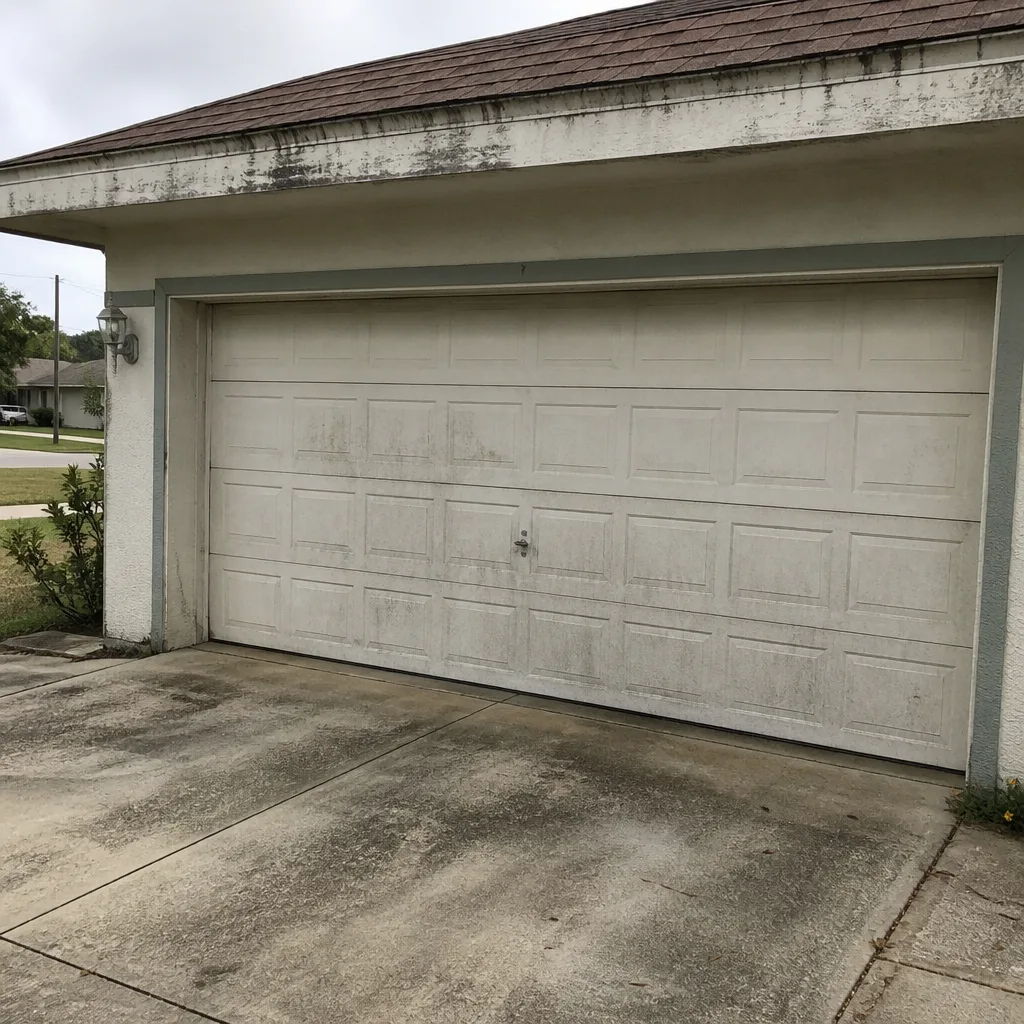
 Before
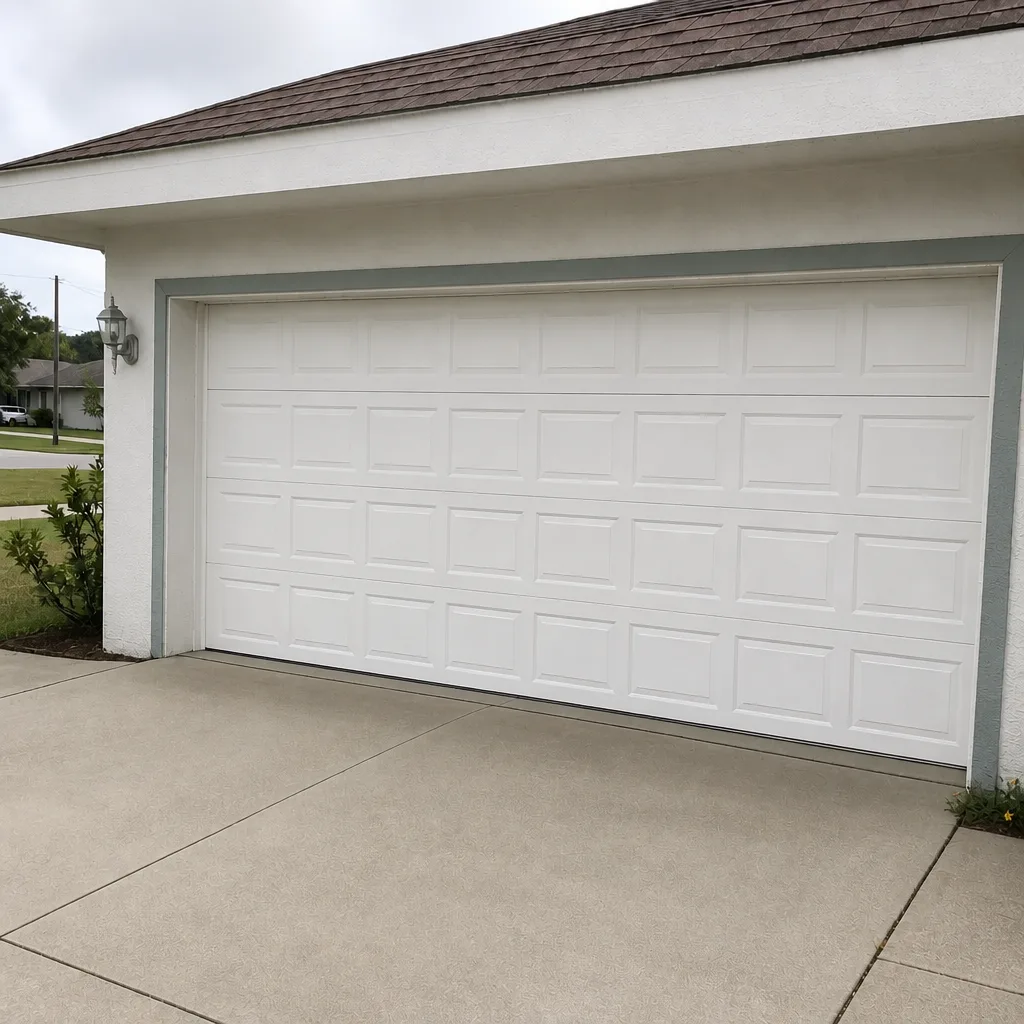
 After
 Before
 After
 Before
 After